


Table of Contents
- What Makes Mulberry Silk Different for Skin
- 7 Benefits of Mulberry Silk for Skin
- Mulberry Silk vs Satin for Skin: What the Labels Hide
- Benefits of Silk Bonnets for Skin and Hair
- How to Wash a Mulberry Silk Pillowcase (and Bonnet)
- Who Benefits Most: Sensitive Skin, Eczema, and Rosacea
- Downsides of Mulberry Silk You Should Know
- Conclusion
- Frequently Asked Questions
Last Updated: September 10, 2026
What Makes Mulberry Silk Different for Skin
Mulberry silk is a natural protein fiber produced by silkworms fed exclusively on mulberry leaves, and its structure closely resembles human skin. This similarity is why it behaves so differently against your face than cotton or polyester.
The fiber contains two key proteins: fibroin, which forms the strong inner core, and sericin, a gummy outer coating that silkworms produce naturally. Most commercial silk removes the sericin, but the fibroin core retains amino acids that interact gently with skin.
The Protein Structure Behind the Softness
Silk fibroin contains 18 amino acids, several of which also appear in human skin proteins (peer-reviewed research). This shared chemistry means the fabric is less likely to trigger the irritation that synthetic fibers cause.
The smooth, cylindrical shape of each silk thread also matters. Cotton fibers have microscopic ridges that catch and pull at skin. Silk threads glide.
Why Momme and Grade 6A Matter
Momme measures silk weight and density. Higher momme means a thicker, more durable fabric. Grade 6A is the highest quality classification for raw silk fiber.
A 22-momme, Grade 6A silk pillowcase holds up to repeated washing and feels denser against skin. Lower grades feel thinner and break down faster.
International Sericultural Commission on silk fiber classification
7 Benefits of Mulberry Silk for Skin
Most articles list these benefits as marketing claims. Here is what is actually happening at the skin surface, and why the mechanism matters more than the claim.
- Reduced friction and mechanical stress. Cotton fibers have a rough, ridged surface that grips skin. Silk fibroin is a smooth, cylindrical filament, so the coefficient of friction against skin is markedly lower. This matters because repeated mechanical stress on the face during sleep is one of the recognized contributors to so-called sleep creases and to the breakdown of collagen and elastin over time. Dermatologists commonly describe this as friction-induced skin aging, and it is the single most defensible reason to switch pillowcases.
- Moisture retention without occlusion. Silk is a protein fiber with a hydrophobic outer surface, so it does not wick away the water and oils in your nighttime skincare the way cotton does. Cotton is hygroscopic, meaning it actively pulls moisture toward itself. If you apply a humectant serum before bed, cotton is competing with your face for that moisture. Silk is not.
- Lower allergenic potential. Silk fibroin is a protein, but it is not the protein most people are sensitized to. Dust mite allergen (Der p 1) is a protein found in mite feces, and silk's tight weave and non-porous surface make it a poor habitat for mites compared with cotton or down. For someone with allergic rhinitis or atopic dermatitis triggered by dust mites, this is a meaningful reduction in nightly exposure.
- Dust mite and allergen resistance. Related to the point above but worth separating: silk's dense weave leaves mites with nowhere to burrow. Cotton's looser, more absorbent structure holds the humidity and skin scale mites feed on. This is why silk is often recommended in allergy-sensitive households.
- Breathability and thermoregulation. Silk is a poor conductor of heat relative to polyester, and its moisture regain properties let it buffer small amounts of humidity without feeling damp. In practice, this means fewer night sweats and less of the heat-and-redness cycle that flushes rosacea-prone skin.
- Amino acid contact with the skin barrier. Silk fibroin contains 18 amino acids, including glycine, alanine, and serine, which are also present in human skin's natural moisturizing factor. Sericin, the gummy outer protein most commercial silk removes, is the fraction most studied for skin compatibility. The honest version: contact transfer from a pillowcase is modest, and the friction and moisture benefits do more work than the amino acids do. Anyone claiming otherwise is overselling.
- Less product transfer. Your serum, moisturizer, and retinoid stay on your face rather than soaking into the pillowcase. Over a month, that is a real difference in how far your skincare budget stretches.
What Silk Will Not Do
It will not replace a retinoid, it will not fix acne driven by hormones or diet, and it will not reverse existing lines. It removes a nightly mechanical and moisture irritant. That is a bounded but genuine benefit, and it is the honest framing most product pages skip.
Mulberry Silk vs Satin for Skin: What the Labels Hide
Satin is a weave, not a fiber. This is the single most misunderstood point in the entire category. A satin pillowcase can be made from polyester, nylon, or silk. When a product says "satin," it tells you nothing about what it is made of.
Mulberry silk is a specific fiber. Satin is a construction method. A polyester satin bonnet will feel slick at first, then pill and trap heat within weeks.
| Feature | Mulberry Silk | Polyester Satin |
|---|---|---|
| Fiber source | Natural protein (silkworm) | Synthetic petroleum-based |
| Breathability | High | Low, traps heat |
| Moisture behavior | Non-absorbent, preserves skin oils | Repels then holds sweat |
| Allergen resistance | Naturally resistant | Can harbor dust mites |
| Durability | Years with proper care | Pills and dulls within months |
| Best for | Sensitive, reactive, aging skin | Short-term cosmetic use |
If a label does not state "100% mulberry silk" with a momme weight, assume it is synthetic satin.
Benefits of Silk Bonnets for Skin and Hair
A silk bonnet protects more than your hairstyle. It shields your forehead, hairline, and temples from the friction and moisture loss that happen overnight. For anyone with textured or coily hair, the hairline is where breakage shows first.

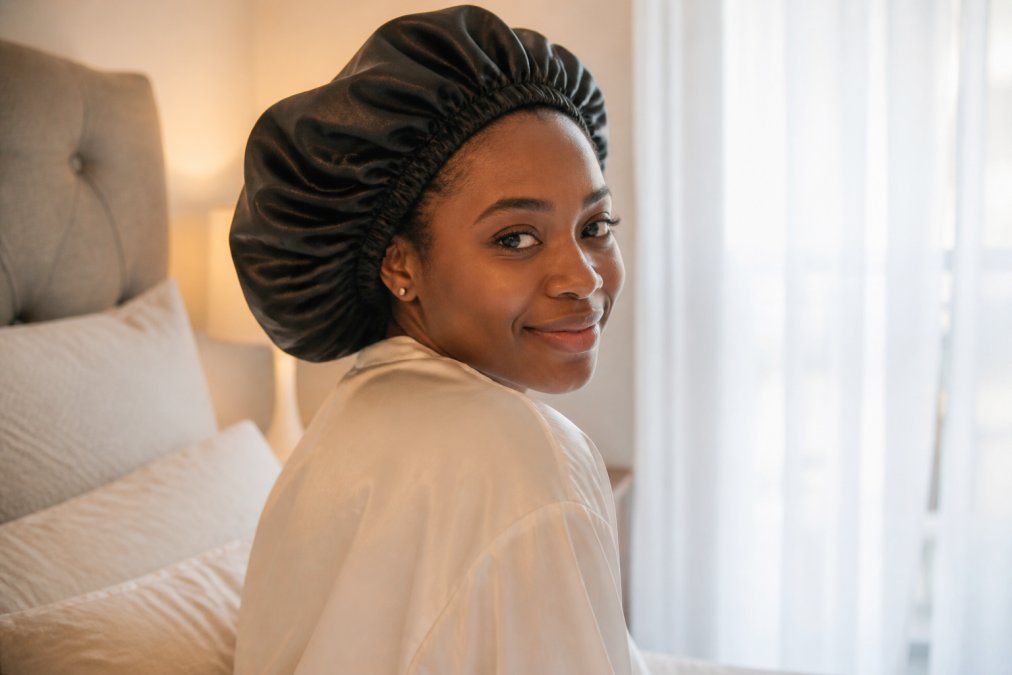
The skin along your hairline is thinner than the skin on your cheeks. Cotton bonnets and rough scarves pull at it for eight hours a night. Silk does not.
Choosing a Bonnet That Stays On
Sliding off is the most common complaint about silk bonnets, and it is almost always a fit problem, not a silk problem. A bonnet that stays put has three things:
- An adjustable band or elastic that sits below the hairline, not across the forehead
- A double-layer construction that adds weight and grip
- Enough interior room for your hair volume without stretching the band
The Whispered Crown™ uses double-layered 22-momme Grade 6A mulberry silk with an adjustable fit designed for thick, coily hair. That construction is why it holds position through the night instead of migrating to your pillow.
How to Wash a Mulberry Silk Pillowcase (and Bonnet)
Hand washing in cool water with a pH-neutral detergent is the safest method for mulberry silk. Hot water and standard laundry detergent break down the protein fibers and dull the finish.
Step-by-step:
- Fill a basin with cool water and add a few drops of silk-safe detergent.
- Submerge the pillowcase or bonnet and gently agitate for 2-3 minutes. Do not wring or twist.
- Rinse in cool water until no suds remain.
- Press water out between two towels. Never wring.
- Hang or lay flat to dry away from direct sunlight.
Wash every one to two weeks. Rotate two pillowcases so one is always clean.
Who Benefits Most: Sensitive Skin, Eczema, and Rosacea
This is where most silk content stays vague. Here is the mechanism, condition by condition.
Eczema and Atopic Dermatitis
Eczema is fundamentally a barrier problem. The skin's outer layer is deficient in ceramides and filaggrin, so it loses water faster than normal skin and lets irritants in. Two things make a pillowcase matter here:
- Moisture loss. Cotton wicks water away from the skin surface. If you apply an emollient or barrier cream before bed, cotton pulls that moisture into the fabric instead of letting it absorb. Silk's non-absorbent surface keeps the occlusive layer where you put it.
- Friction. Eczema skin is already inflamed and itchy. Rubbing against a ridged cotton weave overnight triggers the itch-scratch cycle that makes flares worse. Silk's smooth filament reduces that mechanical trigger.
A common pattern dermatologists describe: patients who switch to silk report fewer morning flares, not because silk treats eczema, but because it stops removing the two things eczema skin needs, moisture and a low-friction surface. If you are managing a diagnosed condition, talk to your dermatologist about whether a pillowcase change is worth adding to your routine.
Rosacea
Rosacea is a vascular and inflammatory condition. Heat, friction, and emotional stress are the classic triggers. A pillowcase contributes to two of the three:
- Heat. Polyester satin and cotton both trap heat against the face. Silk's breathability moves heat away, which reduces the flushing that leads to persistent redness.
- Friction. Rubbing against a rough surface dilates facial blood vessels. Over eight hours a night, that is a lot of repeated vasodilation.
Silk is not a rosacea treatment. It removes two nightly triggers. For someone whose flares track with heat and rubbing, that is often enough to notice a difference within a few weeks.
Sensitive and Reactive Skin
If your skin stings or reddens easily, the issue is usually a compromised barrier plus cumulative irritation. Silk reduces the irritation load without adding anything, no dyes, no finishes, no synthetic fibers shedding microplastics onto your face. That last point is why silk is often recommended over polyester satin for reactive skin: polyester is a petroleum-derived fiber, and while it is not inherently allergenic, it traps heat and sweat in a way that worsens barrier stress.
Postpartum and Perimenopausal Skin
Hormonal shifts after birth leave many women with heightened sensitivity and a barrier that is slower to recover. A rough pillowcase can feel genuinely painful during this window. Perimenopause brings the opposite problem, night sweats, and silk's thermoregulation helps because it moves heat and moisture away rather than trapping them the way polyester satin does.
A Note on Silk and Skin Conditions
None of this is a treatment plan. Silk removes a nightly mechanical and thermal irritant. For eczema, rosacea, and reactive skin, that is a meaningful reduction in trigger load, but it sits alongside your dermatologist's recommendations, not in place of them. If you are managing a diagnosed condition, talk to your dermatologist about whether a pillowcase change is worth adding to your routine.
American Academy of Dermatology guidance on skin barrier care
Downsides of Mulberry Silk You Should Know
Mulberry silk costs more than cotton or synthetic satin, and that price is real. It also requires hand washing, which not everyone wants to do.
The fabric is durable but not indestructible. Rough washing, hot water, and direct sunlight will shorten its life. Pets can snag the weave with a single claw.
There is also a labeling problem in the market. Many products marketed as "silk" contain a blend or are polyester satin with a silk-like finish. Without a stated momme weight and grade, you cannot verify what you are buying.
Where silk falls short: it will not replace a dermatologist's treatment plan, and it will not fix acne caused by internal factors. It reduces mechanical irritation. That is a meaningful but bounded benefit.
Conclusion
The challenge with mulberry silk is not whether it works. It is finding pieces made from genuine Grade 6A fiber rather than polyester satin dressed up with the word "silk." That distinction determines whether you get the friction reduction, breathability, and moisture retention that make silk worth the investment.
Crowning Legacy by Ms. Carla crafts heirloom-quality mulberry silk pieces designed to be worn, inherited, and remembered. The Royal Wrap™ robe and The Whispered Crown™ bonnet are both made from 100% Grade 6A, 22-momme mulberry silk with double-layer construction. The Legacy Set™ pairs both.
Get started with Crowning Legacy by Ms. Carla and give your skin the softness it deserves every night.
Frequently Asked Questions
What's the difference between 100% silk and mulberry silk?
Mulberry silk is a specific type of 100% silk, produced by silkworms fed only mulberry leaves. That diet creates longer, stronger fibers with a smoother surface and higher sericin content than other silks. When a label says '100% silk' without naming mulberry, you could be getting a coarser weave with more friction against your skin. Check for '100% Grade 6A mulberry silk' and a momme rating, such as 22 momme, to confirm you're getting the real thing.
How often should you wash a mulberry silk pillowcase?
Wash your mulberry silk pillowcase every 7 to 10 days, the same schedule you'd use for cotton. Silk is naturally hypoallergenic and resistant to dust mites, but it still collects oils, skincare products, and dead skin cells. If you use heavy night creams or sweat often, wash it weekly. Hand wash in cool water with a pH-neutral detergent, skip the wringer, and lay flat to dry away from direct sun to protect the fibers.
Do dermatologists recommend silk pillowcases?
Many dermatologists suggest silk pillowcases for people with sensitive or reactive skin because silk's smooth surface creates less friction than cotton or polyester. Less friction means fewer sleep creases and less irritation along the jaw and cheeks. Silk also absorbs less of your skincare products and natural oils than cotton, so moisturizers stay on your skin rather than in your pillowcase. It's a supportive choice, not a treatment for diagnosed conditions.
What is the downside of a silk pillowcase?
The main downsides are cost and care. Quality mulberry silk pillowcases typically cost more than cotton, and they need gentle hand washing with pH-neutral detergent instead of a hot machine cycle. Silk also stains easily if you use oil-based products, and direct sunlight weakens the fibers over time. If you can commit to the care routine, the benefits for skin and hair usually outweigh the extra effort.