


Table of Contents
- Why Silk Robes Require Special Care
- Hand Washing vs Machine Washing Silk Robes
- Preparing Your Silk Robe for Washing
- Best Detergent for Mulberry Silk
- Step-by-Step Hand Washing Process
- How to Dry Silk Robes Properly
- Removing Stains and Handling Common Issues
- Storage and Long-Term Care
- Frequently Asked Questions
Last Updated: September 1, 2026
Why Silk Robes Require Special Care
Silk is a protein fiber that responds differently to water, heat, and mechanical stress than synthetic fabrics. Unlike cotton or polyester, silk's delicate structure weakens when exposed to harsh detergents, high temperatures, or aggressive agitation. The fibers in mulberry silk are naturally smooth and lustrous but vulnerable to damage from friction and chemical exposure.
When you invest in a luxury piece like The Royal Wrap™ from Crowning Legacy by Ms. Carla, you're investing in a garment designed to last generations. That longevity depends entirely on how you care for it. Silk robes are often worn directly against sensitive skin, especially during postpartum recovery or through perimenopause when skin sensitivity is heightened. Improper washing can leave detergent residue that irritates rather than soothes.

Hand Washing vs Machine Washing Silk Robes
Hand washing is the gold standard for protecting silk fabric integrity. It allows you to control every variable: water temperature, agitation level, detergent concentration, and rinsing time. You can feel the fabric as you work, responding to how it moves in your hands and preventing over-scrubbing.
Machine washing, even on a delicate cycle, exposes silk to mechanical stress that hand washing avoids. The tumbling action weakens the silk weave over time. Additionally, machine-wash detergents are typically formulated for higher temperatures and more aggressive action than silk requires.
Preparing Your Silk Robe for Washing
Before washing, inspect the entire garment for stains or soiled areas. Check the collar, cuffs, front panels, and anywhere skin made direct contact. Note stains now so you can give those areas extra attention during washing.
Check all pockets and remove anything inside. Ensure buttons, ties, and closures are secure so they don't get caught during washing. Turn the robe inside out before washing to protect the outer surface from direct contact with your hands.
Fill your washing basin with tepid water around 65-75°F (peer-reviewed research). Tepid water is warm enough to help detergent activate but cool enough to prevent heat damage to the silk fibers.
Best Detergent for Mulberry Silk
The detergent you choose makes an enormous difference in how your silk robe ages. A pH-neutral, enzyme-free detergent specifically formulated for delicate fabrics is essential.
Enzyme-based detergents are designed to break down protein stains, but silk itself is a protein fiber and will be damaged by these enzymes (the FDA). Standard laundry detergents are too alkaline for silk, stripping natural oils and leaving residue that dulls the fabric and can irritate skin.
Look for detergents labeled "pH-neutral" and "enzyme-free." Specialty silk detergents are formulated at a lower pH (around 5.5-6.5) that matches silk's natural acidity (peer-reviewed research). Use less detergent than you would for regular laundry; a small amount goes a long way with delicate fabrics. Avoid fabric softeners completely, as they coat fibers with silicone-based products that eventually make the silk feel waxy and look dull.
Step-by-Step Hand Washing Process
Hand washing your silk robe takes about 15-20 minutes, plus drying time.
Step 1: Fill your basin with tepid water (about 2-3 gallons). Add roughly a teaspoon of pH-neutral detergent and stir gently to distribute evenly.
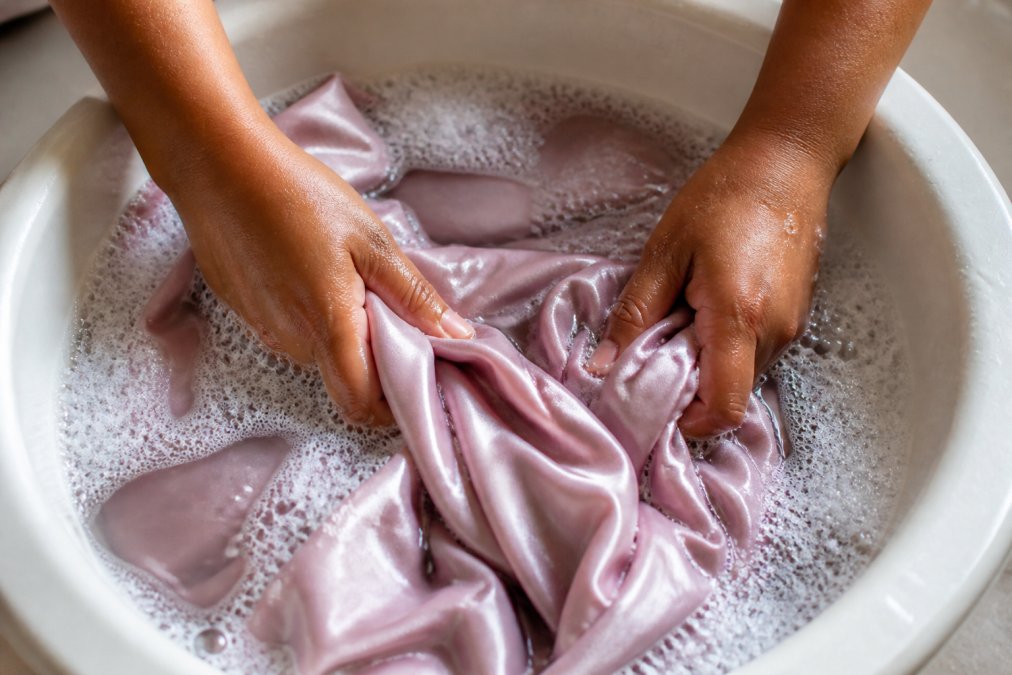
Step 2: Submerge the robe completely. Gently push it under the water without forcing or wringing. Let it soak for 5-10 minutes to allow detergent to penetrate the fibers and loosen dirt.
Step 3: Gently agitate the water around the robe. Use your hands to move the soapy water through the fabric with gentle, circular motions. Focus on areas that touched skin directly: the collar, cuffs, and front panels. Never wring, twist, or scrub harshly.
Step 4: Drain the soapy water. Carefully lift the robe and let it drain. Gently squeeze out excess water by pressing the fabric between your hands.
Step 5: Rinse thoroughly. Refill the basin with fresh tepid water and submerge the robe again. Gently agitate for a minute, then drain. Repeat this rinse cycle 2-3 times until the water runs clear and you don't see soap suds.
Step 6: Final rinse with cool water. Use slightly cooler water (around 60°F) for the last rinse to help close the silk cuticles and enhance natural sheen. Submerge and gently agitate one final time, then drain.
Step 7: Remove excess water. Gently press the robe between your hands to remove excess water. The robe should be damp but not dripping.
How to Dry Silk Robes Properly
Air drying is the only method recommended for silk robes. Direct sunlight, heat sources, and machine drying all pose risks. Sunlight can cause color fading, especially on darker silks like the Onyx Reign colorway of The Royal Wrap™. Machine drying exposes the fabric to heat that weakens protein fibers.
Lay flat to dry. Spread a clean, dry towel on a flat surface away from direct sunlight and heat sources. Lay your damp robe flat on the towel, smoothing it gently so it dries evenly without wrinkles. The jelly roll method, rolling the robe gently in a towel to absorb excess moisture before laying it flat, works well for faster initial drying.
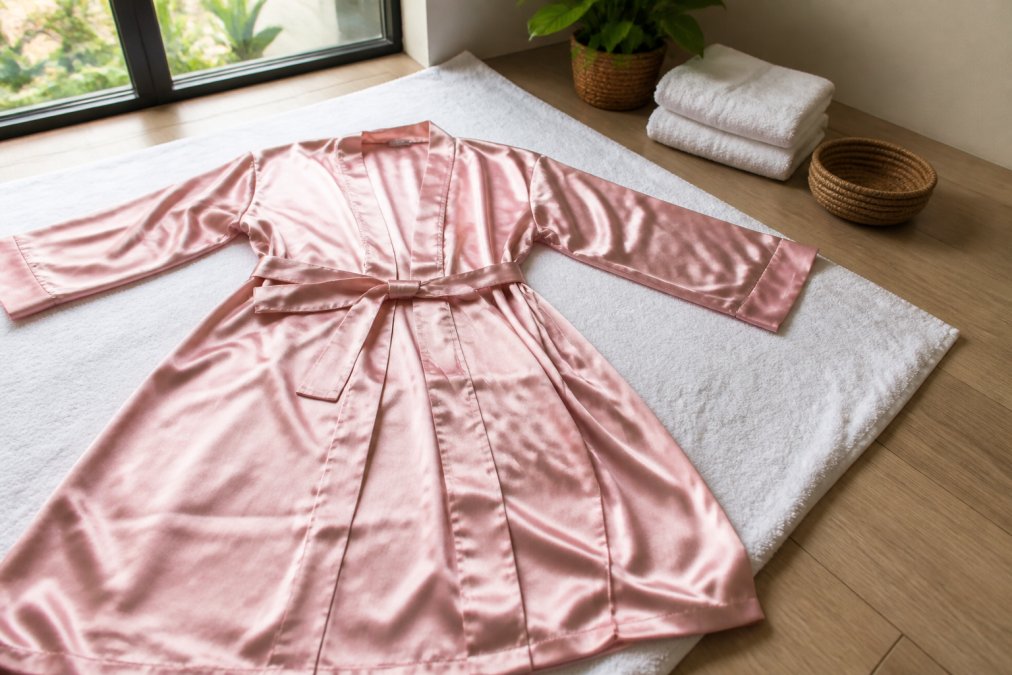
Alternatively, hang the robe on a padded hanger in a well-ventilated area away from direct sunlight. Ensure the hanger is wide enough that the robe's weight distributes evenly. Drying typically takes 4-8 hours depending on humidity and air circulation.
Removing Stains and Handling Common Issues
Fresh stains are far easier to treat than set-in ones, so address them promptly. Blot immediately with a clean, dry cloth; don't rub or scrub, as this pushes the stain deeper into the fibers. For water-based stains, a damp cloth with cool water is often sufficient.
For set-in stains, create a paste of pH-neutral detergent and cool water, apply it gently to the stain, and let it sit for 10-15 minutes. Gently work the paste into the fabric with your fingertips using circular motions. Rinse thoroughly with cool water and repeat if necessary. Never use bleach or oxygen-based stain removers on silk.
For snagged threads, gently push the loop back toward the inside of the fabric using a small needle or crochet hook. For pilling, gently remove fuzzy balls with a soft brush or fabric shaver designed for delicate fabrics. Light wrinkles often disappear after the robe is worn and body heat relaxes the fibers.
Hard water can leave mineral deposits on silk that make it feel stiff or look dull. If you have hard water, consider using distilled water for the final rinse, or add a small amount of white vinegar (about 1 tablespoon per gallon) to help remove mineral buildup.
Storage and Long-Term Care
Store your robe in a cool, dry place away from direct sunlight. A bedroom closet or linen closet is ideal. Avoid damp basements or attics where humidity and temperature fluctuate.
Hang the robe on a padded hanger or fold it carefully along natural seams to minimize creasing. Avoid storing in plastic bags, which trap moisture; use breathable cotton storage bags instead. Keep the robe away from strong fragrances, mothballs, and cedar blocks. If you want to protect against moths, use sealed lavender sachets placed near (not touching) the garment.
Wear your silk robe regularly. Silk benefits from being worn; body oils and natural moisture help keep the fibers supple and lustrous. Plan to wash your silk robe every 4-6 wears, or whenever you notice visible soiling or odor. Between washes, air out your robe in a well-ventilated space to keep it fresh.
For pieces from The Legacy Set™, which includes both The Royal Wrap™ robe and the Whispered Crown™ bonnet, store them together in a designated space to keep your complete set organized.
Caring for a silk robe properly transforms it from a luxury purchase into a lasting investment. Hand washing with pH-neutral detergent, air drying flat, and intentional storage are the foundation of garment longevity. At Crowning Legacy by Ms. Carla, every robe is crafted from Grade 6A mulberry silk specifically to become an heirloom piece you'll wear and treasure for years. Proper care ensures your robe maintains its softness, sheen, and structural integrity, living up to its promise as a legacy garment.
Frequently Asked Questions
Can you machine wash mulberry silk robes?
Machine washing risks significant damage to mulberry silk's delicate protein fibers. Even a delicate cycle can cause fiber degradation, color fading, and loss of the fabric's natural luster. Hand washing is always the safer choice for preserving the integrity and longevity of luxury silk robes like The Royal Wrap™. If you must use a machine, use the gentlest cycle with a mesh laundry bag and pH-neutral detergent.
What's the best detergent for mulberry silk?
Use a pH-neutral, enzyme-free detergent specifically formulated for delicate fabrics. Avoid regular laundry detergents, bleach, and fabric softeners, which degrade silk's protein structure. Look for products labeled 'mild detergent' or 'silk-safe.' When hand washing, use just a small amount, a few drops create adequate soap suds without requiring excessive rinsing, which protects the fabric's integrity.
How do you dry a silk robe without damaging the fibers?
Air drying is essential. Lay your robe flat on a clean, dry towel away from direct sunlight and heat sources. Never use a dryer, which causes heat damage and shrinkage. If you need to speed drying, roll the robe gently in a towel to absorb excess water, then unroll and lay flat. This method, sometimes called the jelly roll method, removes moisture without wringing or twisting the fabric.
What happens if you wash silk that says dry clean only?
Many silk robes labeled 'dry clean only' can actually be hand washed safely at home using the proper technique with pH-neutral detergent and cold water. The label is often conservative to protect the manufacturer from liability. However, if your robe has embellishments, delicate embroidery, or special finishes, professional dry cleaning may be necessary. Always test a hidden area first if you're uncertain about colorfastness.
This article was written using GrandRanker