


Last Updated: October 29, 2026
Quick Summary
Sustainable hair care accessories are reusable, low-waste items made from materials like mulberry silk, bamboo, and organic cotton that protect hair while reducing plastic pollution. They are worth it if you match the fiber to your goal, check construction and care instructions, and keep each item for years instead of replacing it quarterly.
- The global hair accessories market was valued at $25.2 billion in 2025 and is projected to reach $27.2 billion in 2026.
- Ignore eco-friendly and green as standalone claims; look for named fibers, stated weights, and care instructions.
- A silk bonnet reduces friction, holds in natural moisture, and keeps hairstyles intact while you sleep.
- Hand wash silk in cool water with pH-neutral detergent, never wring, and never tumble dry.
- Replace a bamboo brush when bristles splay or the handle cracks, typically after 1 to 2 years.
Table of Contents
- Why Sustainable Hair Care Accessories Matter for Healthy Hair
- How to Choose Sustainable Hair Care Accessories That Actually Work
- The Silk Bonnet for Hair Protection: What It Does Overnight
- Bamboo Hairbrush Benefits for Detangling and Breakage
- Reusable Hair Ties That Hold Without Pulling
- The Silk Pillowcase for Healthy Hair: Bonnet or Pillowcase?
- Caring For and Replacing Your Accessories
- Building Your Sustainable Hair Care Routine
- Frequently Asked Questions
Why Sustainable Hair Care Accessories Matter for Healthy Hair
The global hair accessories market was valued at $25.2 billion in 2025 and is projected to reach $27.2 billion in 2026, according to Grand View Research's hair accessories market analysis. That spending buys a lot of elastics, brushes, and bonnets, yet most shoppers never ask whether the materials touching their hair each night are helping or hurting it. Sustainable hair care accessories are reusable, low-waste items made from materials like mulberry silk, bamboo, and organic cotton that protect hair while reducing plastic pollution. Read about sustainable practices in luxury silk production to see how silk is made with the environment in mind. Below, we explain which materials earn their price, which labels to distrust, and how to build a routine that protects your strands.
How to Choose Sustainable Hair Care Accessories That Actually Work
Start with the material, then the construction, then the care instructions. A pretty accessory that pulls, absorbs moisture, or falls apart after three washes is not sustainable no matter what the tag says.
Material Matters: Silk, Bamboo, and Organic Cotton Compared
Silk is a common choice for overnight protection because its smooth surface reduces friction. An EPA-hosted guide to naturally healthy hair cautions that cotton ponytail holders can draw moisture out of hair, so match the fiber to your goal rather than the marketing. For a deeper breakdown, read our comparison of mulberry silk vs cotton for hair health.
What to Ignore on a Sustainability Label
Ignore "eco-friendly" and "green" as standalone claims. Look instead for named fibers, stated weights, and care instructions. Terms like biodegradable and compostable mean little if the item sheds elastic after a month. A reusable accessory you keep for years beats a compostable one you replace quarterly.
The Silk Bonnet for Hair Protection: What It Does Overnight
A silk bonnet for hair protection reduces friction between your hair and your pillowcase, holds in natural moisture, and keeps hairstyles intact while you sleep. The National Institutes of Health review of hair cosmetics explains how friction and moisture loss contribute to cuticle damage over time. That is the case for silk over cotton or synthetic satin.
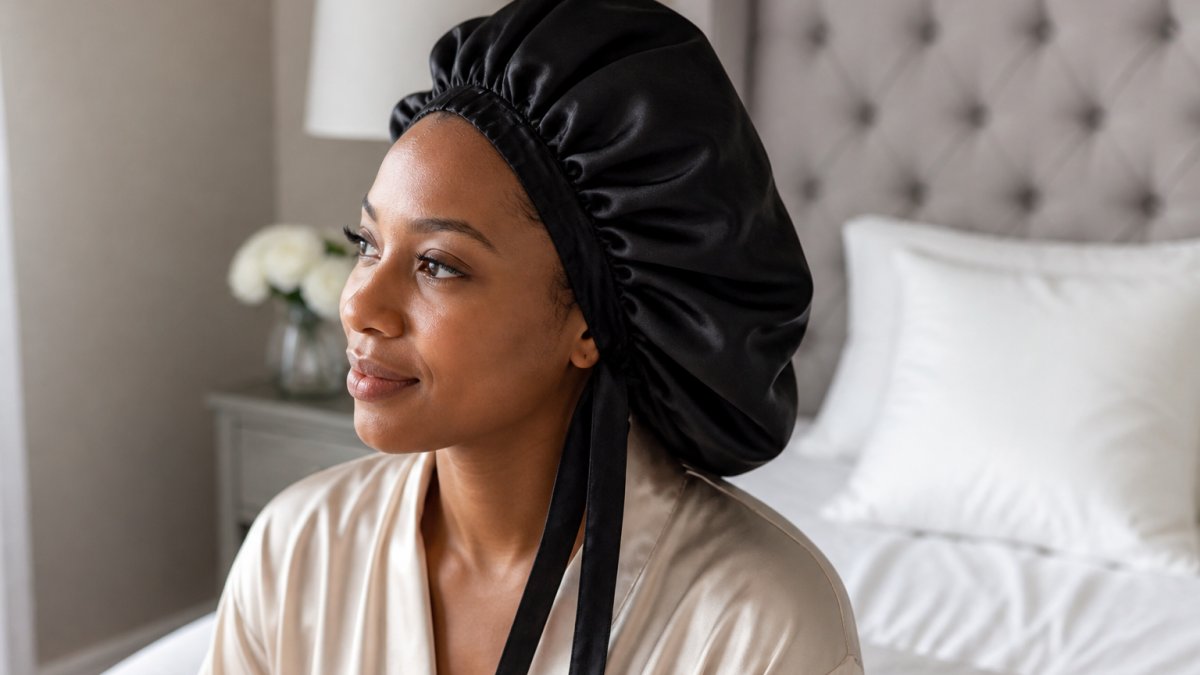
Fit matters as much as fiber. Adjustable silk ties can distribute pressure more evenly than elastic at the hairline. Our Whispered Crown™ luxury mulberry silk bonnet uses double-layer Grade 6A mulberry silk at 22 momme with extended silk ties.

Bamboo Hairbrush Benefits for Detangling and Breakage
Work from ends to roots in small sections, and never rip through a knot. The mechanical rule is simple: the less force you apply, the less damage you cause.
Reusable Hair Ties That Hold Without Pulling
Choose ties with covered or wide bands, rotate placement, and retire any tie that leaves a deep indentation.
The Silk Pillowcase for Healthy Hair: Bonnet or Pillowcase?
A silk pillowcase for healthy hair protects any hair left uncovered, while a bonnet protects a specific style and holds in moisture more completely. Use both if you sleep restlessly; use a bonnet alone if preserving a style overnight is your priority. Neither is a substitute for gentle handling during the day.
The Whispered Crown™ — Luxury Mulberry Silk Bonnet →
Caring For and Replacing Your Accessories
Care is where most "sustainable" accessories quietly become disposable. The practical rule: match the cleaning method to the fiber, inspect regularly, and replace on function, not on a calendar.
Silk (bonnets, pillowcases, wide ties). Hand wash in cool water with a pH-neutral detergent, rinse thoroughly, and roll in a towel to remove water. Never wring, never tumble dry, and dry away from direct sun. Wash bonnets weekly if you use oils or leave-ins; pillowcases every one to two weeks. Signs it is time to replace: permanent creasing, a dull or rough hand, frayed seams, or elastic that no longer holds. For a full breakdown of how long a mulberry silk pillowcase lasts, see our guide.
Organic cotton (scrunchies, headbands, sleep caps). Machine wash cold on a gentle cycle and air dry to limit shrinkage. Cotton holds oils and product residue, so wash monthly at minimum. Replace when the elastic core has stretched or the fabric has thinned at the seam.
Bamboo and wood (brushes, combs). Remove loose hair after every use, wash weekly with a drop of mild soap, and dry bristle-side down so water does not sit in the handle. Never soak. Oil wooden handles occasionally with a food-safe oil. Replace when bristles splay, teeth chip, or the handle cracks, a cracked wooden brush can snag and tear strands.
Natural rubber and covered ties. Wash monthly in cool water and air dry. Rubber degrades with oils, sweat, and sun, so expect a shorter life than silk or cotton. Retire any tie that is tacky, cracked, or leaves a deep indentation.
| Accessory | Care frequency | Typical replacement | Replace when |
|---|---|---|---|
| Silk bonnet | Hand wash weekly | 2-3 years | Rough hand, frayed seams, stretched ties |
| Silk pillowcase | Wash every 1-2 weeks | 2-3 years | Dull sheen, permanent creases, thin spots |
| Bamboo brush | Clean weekly | 1-2 years | Splayed bristles, cracked handle |
| Wood comb | Wipe weekly, oil monthly | 2-3 years | Chipped teeth, splitting |
| Reusable hair ties | Wash monthly | 6-12 months | Tacky, cracked, or stretched |
Building Your Sustainable Hair Care Routine
Build the routine around your hair type and sleep habits, not a shopping list. Our guide on how to wear hairstyles under a silk bonnet walks through practical options for overnight wear.
Frequently Asked Questions
What are the best sustainable hair care accessories for healthy hair?
Start with items that touch your hair daily: a mulberry silk bonnet or pillowcase, a bamboo hairbrush, reusable hair ties, and a wide-tooth comb. Mulberry silk reduces friction and moisture loss overnight, while bamboo brushes detangle with less pulling. Plastic-free options like organic cotton scrunchies and bamboo tools are becoming more popular. Choose washable, durable pieces you will keep for years rather than replace monthly.
Are silk bonnets good for protecting hair while you sleep?
Yes. A silk bonnet for hair protection reduces the friction that causes frizz, breakage, and lost edges. Look for 100% mulberry silk with adjustable ties rather than elastic bands, which can create tension along the hairline. The Whispered Crown™ from Crowning Legacy uses Grade 6A mulberry silk at 22 momme with extended silk ties, so it stays put without pressing on your edges.
Are bamboo hairbrushes better for your hair?
A bamboo hairbrush is gentler than many plastic brushes because the natural bristles and rounded tips glide through tangles with less snagging. Bamboo is also a renewable material, which is why brands market it as a low-waste alternative. Use it on damp or dry hair with light pressure, starting at the ends and working upward. Replace it when bristles bend or the base cracks, usually every 12 to 18 months with regular washing.
What is the difference between a silk bonnet and a satin bonnet?
Silk is a natural protein fiber; satin is a weave that can be made from polyester or silk. A polyester satin bonnet feels smooth but traps heat and does not breathe the way mulberry silk does, which matters if you run warm at night. Silk also regulates temperature and is naturally hypoallergenic, so it suits sensitive scalps. Check the label for 100% mulberry silk and a momme weight of at least 19 for real durability.
The challenge is not finding accessories; it is choosing ones that protect your hair and last long enough to justify the price. Crowning Legacy by Ms. Carla builds heirloom-quality mulberry silk pieces with double-layer Grade 6A silk, adjustable ties, and temperature-regulating construction designed to be kept, not replaced. Get started with Crowning Legacy by Ms. Carla and give your hair the protection it deserves.
