


Last Updated: October 24, 2026
Quick Summary
The best hairstyles under silk bonnet are low-tension styles like loose braids, pineapples, and soft buns that protect your edges, preserve moisture, and keep curls intact overnight. These styles work with your bonnet's fit without creating pressure or tension on your scalp.
- Loose braids and twists should feel comfortable enough to sleep in without noticing them.
- A pineapple style gathers hair gently at the crown using a silk scrunchie, preserving curl definition.
- Bonnet ties should be snug enough to prevent slipping but loose enough to fit one finger between the tie and your head.
- Mulberry silk is superior to satin for reducing friction and protecting against moisture loss.
- Long hair requires low protective styles like single braids or low buns to prevent bonnet shifting during sleep.
Table of Contents
- Why Hairstyle Matters When Wearing a Silk Bonnet
- Protective Hairstyles for Sleeping
- How to Wear a Bonnet With Curly Hair
- How to Put Long Hair in a Bonnet
- How to Keep a Bonnet on Overnight
- Choosing the Right Bonnet for Your Hair and Style
- Preparing Your Hair Before Putting on a Bonnet
- Frequently Asked Questions
Why Hairstyle Matters When Wearing a Silk Bonnet
The right hairstyle under a silk bonnet protects your edges, preserves moisture, and keeps your curls intact through the night. Not every style works equally well. Some create tension that damages hair. Others slip out by morning. The goal is low tension, secure placement, and styles that work with your bonnet's fit.
Your hair health depends on what you choose. Tight styles pull at the scalp and weaken edges. Loose, protected styles let your hair breathe while the bonnet's silk reduces friction. This is where hairstyles under silk bonnet choices become critical. According to research on nocturnal hair maintenance techniques, people with textured and curly hair benefit most from intentional overnight styling paired with protective materials.
At Crowning Legacy by Ms. Carla, we believe your nighttime ritual matters as much as your daytime care. A silk bonnet alone isn't enough. The hairstyle you choose underneath determines whether your bonnet protects or pressures your hair.
Protective Hairstyles for Sleeping
The best hairstyles for sleeping under a bonnet share one quality: they're low-tension styles that don't pull on your scalp or edges. These styles work with gravity and your bonnet's design, not against them.
Loose Braids and Twists
Loose braids and twists are foundational protective styles for bonnet wear. They keep hair contained without creating pressure points. A loose three-strand braid or two-strand twist allows your curls to rest while preventing tangles overnight.
The key word is loose. Tight braids defeat the purpose. Your braids should feel comfortable enough to sleep in without noticing them. When you braid, use gentle tension and avoid pulling at the roots. This protects your edges and prevents breakage.
Place your braids low on your head, toward the nape of your neck. This positioning keeps them secure inside your bonnet without creating bulges that push against the fabric. Two side braids work well for medium-length hair. For longer hair, a single low braid or two braids pinned gently at the crown works better.
Pineapple and Loose Buns
The pineapple is one of the most effective hairstyles under silk bonnet styles for curly hair. Gather your hair gently at the crown, secure it loosely with a silk scrunchie, and let your curls fall from that high point. The style preserves curl definition while keeping hair off your face and neck.
A loose bun works similarly. Gather hair into a soft, loose knot at the crown or the nape of your neck. Avoid tight, compact buns that create tension. Your bun should feel airy, not pulled. Secure it with a silk or fabric scrunchie, never a metal clip or elastic that grips too tightly.
Both styles fit comfortably inside your bonnet without creating pressure. The bonnet's fabric rests gently against your hair rather than pressing it flat. When you remove your bonnet in the morning, your curls maintain their shape and volume.
Wash-and-Go and Rod Sets
A wash-and-go style, hair air-dried or diffused without manipulation, works beautifully under a bonnet. Your curls dry in their natural pattern and the bonnet protects them overnight. This is the easiest option if you have time to air-dry before bed.
Rod sets create defined curls and waves. After setting your hair on rods, let it dry completely, then gently remove the rods. Place your set hair into a loose pineapple or let it sit naturally inside your bonnet. The bonnet's silk prevents frizz and keeps your set intact.
Both styles require minimal tension. Your hair rests in its natural or set pattern while the bonnet's fabric reduces friction. This combination preserves your style for multiple days.
How to Wear a Bonnet With Curly Hair
Curly hair requires specific bonnet placement to prevent frizz and maintain curl definition. The bonnet should sit on your head without flattening your curls or creating pressure on your scalp.
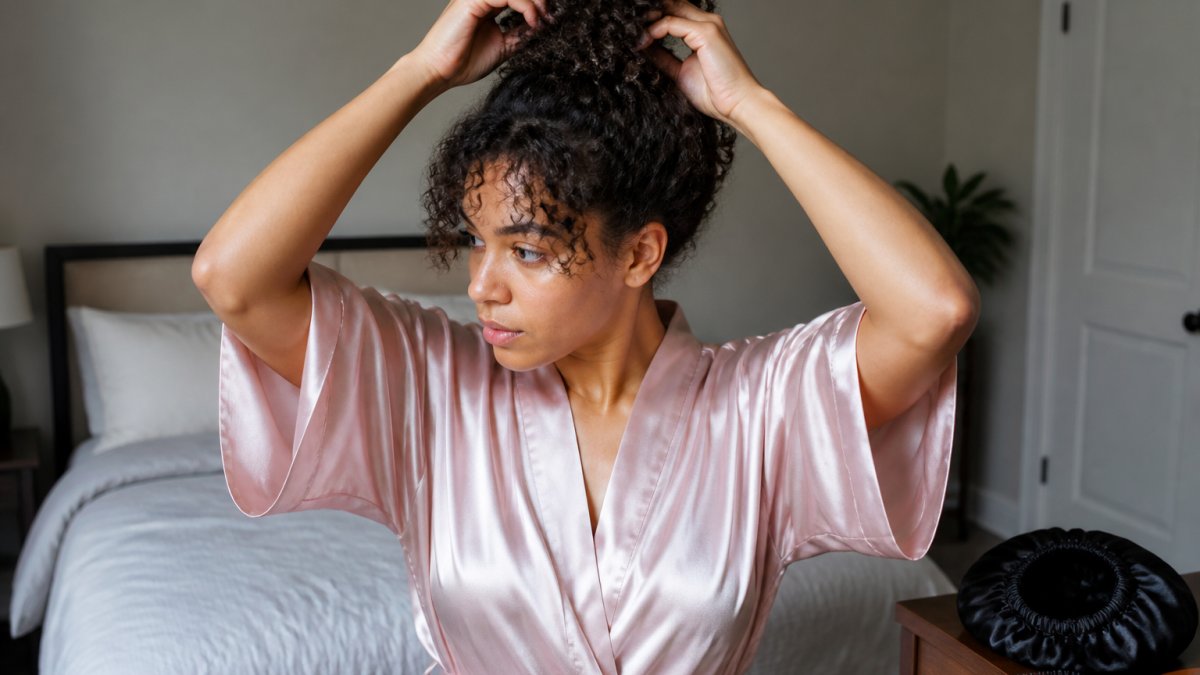
Start with a loose protective style like a pineapple or soft bun. Gather your curls gently at the crown without pulling. Use a silk or fabric scrunchie to secure them loosely.
Place your bonnet over your gathered curls. The bonnet's opening should sit at your hairline, not pulled down tight.
Curly hair responds best when your bonnet respects your curl pattern. Avoid pushing curls down into the bonnet. Let them sit naturally inside the fabric. The bonnet's silk will reduce friction and frizz without flattening your texture.
For tighter curls or coils, ensure your hairstyle choice allows curls to expand slightly inside the bonnet. A very tight pineapple can restrict curl expansion. A slightly looser gathering gives your curls room to breathe while staying protected.
How to Put Long Hair in a Bonnet
Long hair requires thoughtful placement to prevent slipping and tangling. The weight of long hair can shift your bonnet during sleep, so your hairstyle and bonnet fit work together.
Choose a low protective style for long hair. A single low braid, two low braids, or a low loose bun keeps the bulk of your hair at the nape of your neck rather than at the crown. This positioning distributes weight evenly and prevents your bonnet from shifting upward.
Secure your style loosely with a silk scrunchie. Tight securing creates tension and can cause breakage over time. Your style should feel comfortable enough to sleep in without noticing it.
Place your bonnet on your head and adjust it so it sits evenly. Your hair should sit inside the bonnet without bulging or creating pressure points.
The bonnet's ties should sit comfortably under your chin or behind your ears, depending on the style. If your bonnet slides off during sleep, your style may be too loose or your bonnet may not fit properly. Learn how to choose the right size mulberry silk bonnet for long hair to ensure proper fit. guidance on proper bonnet sizing for longer hair can help you find the right fit.
The Whispered Crown™ — Luxury Mulberry Silk Bonnet →
Consider the length of your hair when choosing your bonnet. Longer hair needs a bonnet with enough interior space to accommodate your style without compression. A bonnet designed for shorter hair may be too small for long hair, creating pressure and discomfort.
How to Keep a Bonnet on Overnight
A bonnet that stays in place all night protects your hairstyle and prevents friction damage. The combination of proper fit, secure ties, and the right hairstyle keeps your bonnet stable.
Your bonnet's ties are critical. Silk ties adjust smoothly and don't create friction like elastic does. Adjust your ties so they're snug but not tight.
Your hairstyle choice affects bonnet stability. Discover best practices for wearing a silk bonnet every night to maintain your hairstyles and protect your hair. A very loose, voluminous style can push your bonnet upward during sleep.
The bonnet's fit matters most. A bonnet that's too large will slip.
Some people find that a double-lined bonnet provides better security. The double layer adds structure and reduces slipping. The Whispered Crown™ from Crowning Legacy by Ms.
Sleep position affects bonnet stability too. Side sleepers may experience more bonnet shifting than back sleepers. If you're a side sleeper, ensure your bonnet fits snugly and your hairstyle is secure.
Choosing the Right Bonnet for Your Hair and Style
Your bonnet choice determines how well your hairstyle stays protected. The right bonnet fits your head, accommodates your hair volume, and uses materials that reduce friction.
Silk is superior to satin for hair protection. Mulberry silk naturally regulates temperature, reduces friction, and protects against moisture loss. Satin offers some benefits but lacks silk's durability and breathability.
Bonnet size matters more than most people realize. A bonnet that's too small compresses your hair and creates tension. A bonnet that's too large slips off during sleep.
Bonnet style affects fit and function. A bonnet with extended silk ties gives you precise adjustment control. Some bonnets use elastic, which creates friction and tension on your hair. Silk ties slide smoothly and adjust without pulling.
A double-lined bonnet provides better structure and security than a single layer. The double layer reduces slipping and maintains its shape better over time. It's also more durable for long-term wear.
The Whispered Crown™ luxury mulberry silk bonnet is designed with extended mulberry silk ties and double-layer construction. The bonnet accommodates various hair volumes and hairstyles without creating tension or pressure.
Preparing Your Hair Before Putting on a Bonnet
How you prepare your hair before putting on your bonnet affects how well your hairstyle holds and how protected your hair stays overnight.
Start with clean or refreshed hair. If your hair is dirty or product-heavy, it's more likely to tangle or slip inside your bonnet.
Apply your leave-in conditioner or moisturizing product while your hair is still damp. This step locks in moisture before you create your protective style.
Let your hair dry completely before putting on your bonnet. Wet hair inside a bonnet can create mildew or mold. If you're air-drying, allow extra time.
Choose your protective style based on your hair texture and length. Curly hair benefits from a pineapple or loose bun.
Secure your style loosely. Tight securing creates tension that damages hair over time. Your style should feel comfortable enough to sleep in without noticing it.
Apply a silk bonnet with proper fit and adjusted ties. Your bonnet should sit evenly on your head without sliding.
Protecting your hair overnight is an act of intention. The hairstyle you choose, the bonnet you wear, and the care you take in preparation all matter.
| Hairstyle | Best For | Tension Level | Bonnet Fit |
|---|---|---|---|
| Loose braids | All hair types | Low | Standard |
| Pineapple | Curly, coily hair | Low | Standard to spacious |
| Loose bun | All hair types | Low | Standard |
| Wash-and-go | Curly, wavy hair | None | Standard |
| Rod sets | Curly, wavy hair | None | Spacious |
| Two-strand twists | Coily, textured hair | Low | Spacious |
Frequently Asked Questions
What is the best hairstyle to wear under a silk bonnet?
The best hairstyle depends on your hair type and length. Loose braids, twists, pineapples, and buns all work well under a silk bonnet because they minimize tension and friction. The key is choosing a low-tension style that won't create pressure points on your scalp or edges. For curly hair, a pineapple preserves curl definition. For longer hair, loose braids or a soft bun prevents tangling. Avoid tight styles that create pulling, as they can cause breakage even with a protective bonnet.
Should I braid my hair before putting on a silk bonnet?
Braiding before wearing a bonnet is an excellent choice, especially for textured hair. Loose braids protect your hair from friction and tangling overnight while allowing your bonnet to sit securely. Avoid tight braids, which create tension even with silk protection. Two-strand twists work similarly well. The Whispered Crown™ bonnet's extended silk ties adjust to fit braided styles comfortably without slipping, ensuring your protective style stays in place all night.
How do you keep a silk bonnet from flattening your hair?
Use a bonnet with proper fit and secure ties. A bonnet that's too loose will slip and cause friction; one that's too tight creates pressure that flattens curls. The Whispered Crown™ features extended mulberry silk ties instead of elastic, allowing you to adjust the fit precisely without tension. Choose a style with volume like a pineapple or loose bun, and position the bonnet so it sits above your curls rather than pressing down on them. A double-lined silk bonnet like The Whispered Crown™ provides structure that supports your style.
Should hair be wet or dry before wearing a bonnet?
Wear your bonnet over dry or damp hair, never soaking wet. Wet hair is more fragile and prone to breakage. If you've just washed your hair, allow it to air-dry or blow-dry completely before putting on your bonnet. Damp hair is acceptable if you're doing a wash-and-go style, but excess moisture can cause mildew and reduce the bonnet's effectiveness. Mulberry silk like that in The Whispered Crown™ naturally regulates moisture, but starting with dry hair ensures your protective style works optimally.
