


Last Updated: October 22, 2026
Quick Summary
A well-made mulberry silk pillowcase lasts roughly two to three years with regular washing, and up to five years with careful rotation and gentle care. The fabric rarely fails on its own, so your care routine decides how long it lasts.
- Hand wash in cool water with pH-neutral detergent and air dry away from direct sunlight.
- Grade 6A silk and 22-23 momme weight are heavier, denser, and more durable than 19 momme.
- Replace when fabric thins, seams fray, or sheen fades, not on a fixed calendar date.
- Machine washing and drying shortens lifespan to one to two years.
- Buy two pillowcases and alternate so each sees half the washing cycles per year.
Table of Contents
- How Long Does a Mulberry Silk Pillcase Last?
- Why Lifespan Estimates Vary So Much
- Mulberry Silk vs Regular Silk: Why Grade and Momme Weight Matter
- How Often to Replace a Silk Pillowcase
- How to Wash a Silk Pillowcase Without Shortening Its Life
- Silk Pillowcase Care: Drying, Ironing, and Daily Habits
- Lifespan by Washing Frequency and Care Routine
- What Fails First, and What It Costs Per Year
- Frequently Asked Questions
How Long Does a Mulberry Silk Pillcase Last?
A mulberry silk pillowcase is a pillow cover woven from fibers produced by silkworms fed on mulberry leaves. Most people want one number. The honest answer: a well-made mulberry silk pillowcase lasts roughly two to three years with regular washing, and up to five years with careful rotation and gentle care.
Below, we'll show you exactly what shortens a pillowcase's life, how to wash and dry it without damage, and how to spot the moment it needs replacing.
Why Lifespan Estimates Vary So Much
Lifespan estimates swing wildly because they measure different things. Some brands quote the life of the fabric itself. Others quote the life of a pillowcase washed weekly on a hot cycle and tossed in a dryer.
Three variables explain almost every difference:
- Silk grade and momme weight. A heavier, higher-grade weave simply has more fiber to lose.
- Washing frequency and method. Weekly machine washing with harsh detergent wears silk far faster than hand washing in cool water.
- Handling between washes. Sun exposure, rough zippers, and unwashed hair all speed up wear.
A cheap, thin pillowcase washed hard may show thinning within a year. A premium piece treated gently can hold its sheen for years. Same product category, very different outcomes.
Mulberry Silk vs Regular Silk: Why Grade and Momme Weight Matter
Mulberry silk is the strongest, smoothest type of silk available, and it outlasts most other silk types because its fibers are long and uniform. Regular "silk" on a label can mean wild silk, tussah silk, or a blend, all of which tend to pill and dull faster.
Two numbers tell you the most about durability:
- Grade: Grade 6A is the top classification for silk fiber quality. Longer, cleaner fibers mean fewer weak points.
- Momme weight: Momme measures fabric density. 19 momme is the common entry point. 22 momme and 23 momme are heavier, denser, and noticeably more durable.
| Factor | Lighter Silk (19 momme) | Heavier Silk (22-23 momme) |
|---|---|---|
| Feel | Light, airy | Substantial, cool |
| Durability | Moderate | High |
| Wear pattern | Thins faster at friction points | Holds structure longer |
| Expected life with weekly washing | Shorter | Longer |
A 19 momme pillowcase can serve you well. A 22 or 23 momme piece gives you more margin for error, which matters if you wash often.
How Often to Replace a Silk Pillowcase
Replace a silk pillowcase when the fabric thins, the seams fray, or the surface loses its sheen, not on a fixed calendar date. For most households, that lands around the two-to-three-year mark with regular washing. But "around two to three years" is a range, not a decision rule. The useful skill is knowing which failure you are looking at and whether it is the fabric giving out or a single component you can fix.
The Wear-and-Tear Inspection Checklist
Run this check every few months. Hold the pillowcase up to a bright window and work through the list:
- Thinning fabric: Can you see light through the center panel more easily than before? Compare against a less-used area like the inner flap or the back panel.
- Seams: Are stitches pulling loose at the corners or along the closure? Look for skipped stitches and thread ends sticking out.
- Closure: Does the zipper stick, or has the envelope flap stretched out of shape? A zipper that catches is already abrading the fabric beside it.
Two or more checks failing means it's time to shop. One failing check means adjust your routine and recheck in a month.
What Each Failure Actually Means
The face panel thins first, right where your cheek and hair rub nightly. That is mechanical abrasion, not a manufacturing defect, and no care routine fully prevents it.
A single snag is not end-of-life. A run of thinning across the center panel is. The distinction is whether the damage is localized (one spot, one seam) or distributed (the whole face zone going thin at once).
Repair or Replace?
Some failures are worth fixing, and fixing them can add months or years to a pillowcase's usable life:
- Loose seam at a corner: A five-minute re-sew with a fine needle and silk thread restores it. Worth doing.
- Failed zipper: A tailor can replace a zipper, but the cost often approaches the price of a new case, and the surrounding fabric is usually already worn. Usually not worth it.
- Stretched envelope flap: Can sometimes be re-stitched to tighten the opening. Worth trying before replacing.
The general rule: repair the structure (seams, closures), replace the surface (thinning, dullness, roughness). A re-sewn seam on thinning silk just moves the failure point a few weeks down the road.
A Simple Replacement Timeline
If you want a planning number rather than a rule: inspect at the six-month mark, again at eighteen months, and then every six months after. Most cases pass the first two inspections cleanly, show one failing check around year two, and hit two failing checks between years two and three under weekly washing. Heavier 22-23 momme cases tend to push that final step out by a year or more. Lighter 19 momme cases washed weekly often reach it sooner.
How to Wash a Silk Pillowcase Without Shortening Its Life
Wash a silk pillowcase in cool water with a pH-neutral, silk-safe detergent, then air dry it away from direct sunlight. That single routine adds years to the fabric.
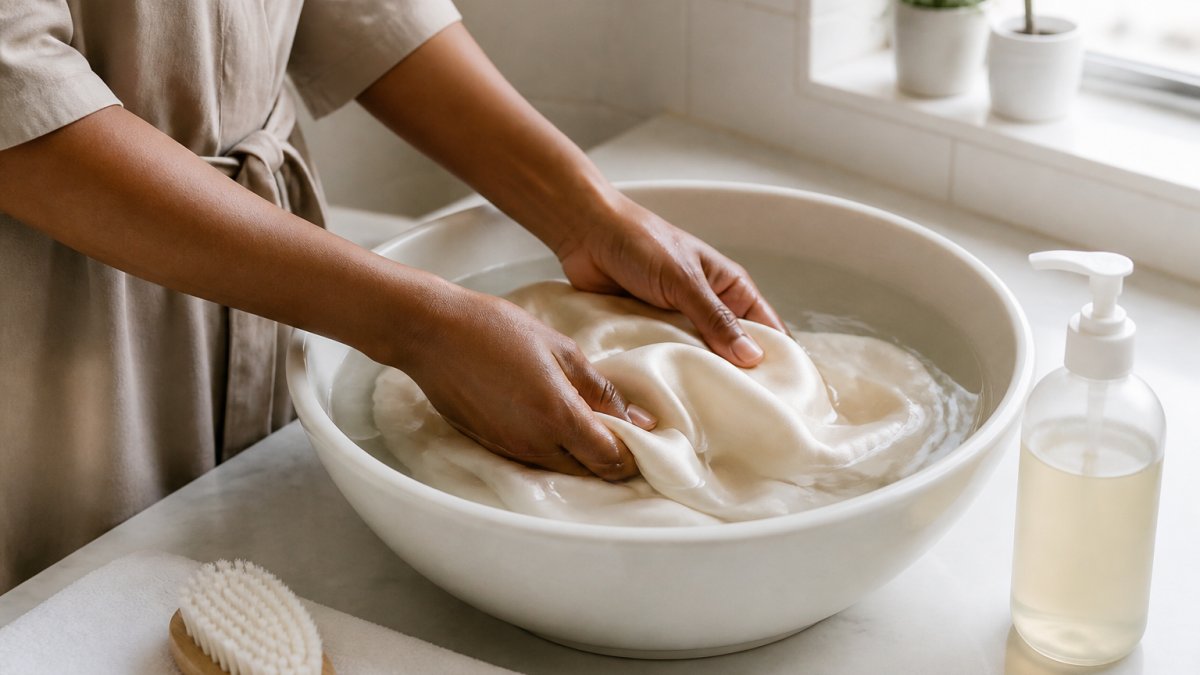
Here is the routine we recommend:
- Turn it inside out to protect the face surface.
- Fill a basin with cold water and add a small amount of pH-neutral detergent.
- Swirl gently for a minute or two. Never wring or twist.
- Rinse in cool water until the water runs clear.
- Roll in a towel to press out moisture, then air dry.
Never use bleach or fabric softener. Both break down silk fibers and strip the natural sheen.
Hand Washing vs Machine Washing
Hand washing is the safest choice and the one we recommend for any premium piece. Machine washing is possible on a delicate cycle in a mesh bag, but it carries real risk: agitation causes friction, and friction causes snags.
If you machine wash, choose the gentlest cycle, use cold water, and skip the spin cycle. Expect a shorter lifespan than hand washing delivers. The convenience is real; so is the cost.
Silk Pillowcase Care: Drying, Ironing, and Daily Habits
Air drying is non-negotiable. Hang or lay the pillowcase flat in a shaded, well-ventilated spot. Direct sunlight fades color and weakens fibers over time.
For wrinkles, iron on the lowest heat setting while the silk is still slightly damp, or use a steamer. Keep the iron moving and never let it rest in one spot.
Daily habits matter just as much:
- Rotate two pillowcases so each one rests between washes.
- Keep hair products and heavy creams off the fabric where you can.
- Store clean pillowcases flat, away from rough zippers and hooks.
Lifespan by Washing Frequency and Care Routine
How you care for a silk pillowcase predicts its lifespan better than the price tag does. The table below is a starting point, but the numbers only make sense once you see what each routine is actually doing to the fiber.
| Care Routine | Washing Frequency | Likely Lifespan |
|---|---|---|
| Hand wash, cool water, air dry, rotated | Weekly | 3-5 years |
| Hand wash, occasional machine delicate cycle | Weekly to biweekly | 2-3 years |
| Machine wash, regular detergent, machine dry | Weekly | 1-2 years |
| Harsh detergent, hot water, direct sun drying | Weekly | Under 1 year |
The pattern is clear. The gentler the routine, the longer the fabric holds. A second pillowcase in rotation is one of the cheapest ways to double the life of both.
Why Weekly Washing Is the Real Variable
Most people wash a pillowcase weekly, and that frequency is the single biggest driver of wear. Silk fibers are strong along their length but fragile against repeated bending and friction.
Weekly washing is still the right call for skin health, especially if you have oily skin, use leave-in hair products, or sleep warm. The goal is not to wash less; it is to make each wash gentler.
Scenario Guide: Match the Routine to Your Household
Scenario 1: Weekly washer, hand-wash routine, two cases in rotation. This is the best-case realistic setup. Each case sees about 26 washes a year instead of 52, cool water and pH-neutral detergent minimize fiber stress, and air drying avoids heat. Expect three to five years, with the face panel thinning first.
Scenario 2: Weekly washer, machine delicate cycle in a mesh bag, air dry. Convenience costs some life. Agitation causes friction and friction causes snags, even in a mesh bag.
Scenario 3: Weekly washer, regular detergent, machine dry. The dryer is the main culprit here. Heat and tumbling break down silk fibers and strip sheen faster than washing alone. Expect one to two years, and expect the sheen to go first.
Scenario 4: Hot water, harsh detergent, direct sun drying. This combination attacks the fiber from three directions at once: heat, chemical stripping, and UV. Under a year is common. If this is your current routine, changing any one of the three variables will measurably extend life.
The Cheapest Upgrade: A Second Pillowcase
If you change nothing else, buy a second pillowcase and alternate. Two cases washed weekly means each one rests between washes, dries fully, and sees half the abrasion cycles per year. In practice, a pair of mid-weight cases outlasts a single premium case washed twice as often, and the pair costs less than replacing the single case early.
What Fails First, and What It Costs Per Year
The face panel thins first, right where your cheek and hair rub nightly. Next come the seams at the corners, then the closure.
Repair is rarely worth it. A re-sewn seam on thinning silk just moves the failure point a few weeks down the road.
Cost per year is the honest way to judge value. A pillowcase that lasts two years costs half its purchase price per year.
At Crowning Legacy by Ms. Carla, our mulberry silk pieces are made to be worn, inherited, and remembered. Heirloom quality starts with heirloom care.
Frequently Asked Questions
How long does a mulberry silk pillowcase last?
A well-made Grade 6A mulberry silk pillowcase typically lasts 2 to 5 years with proper care. The range is wide because lifespan depends on momme weight, washing frequency, water temperature, and how the pillowcase is dried. A 22 momme pillowcase washed weekly in cold water and air dried will usually outlast a 19 momme pillowcase washed in warm water and tumbled dry. Inspect seams and fabric thickness each year to judge whether yours is still holding up.
What causes a silk pillowcase to wear out faster?
The biggest culprits are hot water, regular detergent with enzymes or bleach, fabric softener, and machine drying on any heat setting. All of these break down silk fibers and strip the natural sheen. Daily friction from textured hair, jewelry, and rough pillow inserts also speeds up wear. Rotating two pillowcases and washing on a gentle cycle in cold water with a pH-neutral detergent will slow premature wear considerably.
How can you tell when a silk pillowcase needs replacing?
Look for thinning fabric near the center where your head rests, fraying at the seams, a dull or patchy loss of sheen, and small snags that turn into runs. Hold the pillowcase up to light: if you can see through it in spots, the fibers have weakened. A zipper that no longer closes smoothly or an envelope closure that has stretched out are also signs it is time for a replacement.
What is the difference between 100% silk and mulberry silk?
Mulberry silk is a specific type of 100% silk produced by silkworms fed a mulberry-leaf diet, and it is generally smoother and more uniform than other silk types. Grade 6A is the highest quality grade, and momme weight (19, 22, or 23) measures fabric thickness. A pillowcase labeled simply '100% silk' may still be lower grade or lighter weight, so check both the grade and the momme number before buying.
Silk rewards patience. Wash it gently, dry it in the shade, and rotate it often, and a quality mulberry silk pillowcase will serve you for years. When you're ready for pieces built to last, Crowning Legacy by Ms. Carla offers luxury mulberry silk crafted with generational care, designed to be worn, inherited, and remembered. Explore the collection and give your nightly routine the softness and elegance it deserves.