


Table of Contents
- Why Silk Robe Care Matters for Longevity
- How to Wash a Silk Robe Without Damage
- How to Remove Stains from Silk Robes
- How to Dry Silk Clothing Properly
- How to Store Silk Robes to Preserve Softness
- Restoring Softness and Troubleshooting Common Issues
- Caring for Your Silk Robe as an Heirloom Investment
- Frequently Asked Questions
Last Updated: October 17, 2026
Why Silk Robe Care Matters for Longevity
Your silk robe is an investment in your comfort, your healing, and your legacy. At Crowning Legacy by Ms.
Mulberry silk is delicate but resilient when you know what it needs. Neglect the fibers and they become stiff, dull, and fragile; honor them and they reward you with years of unmatched softness and breathability.

Whether you're postpartum, navigating perimenopause, or simply embracing a soft life philosophy, this guide walks you through every step of caring for your silk robe.
How to Wash a Silk Robe Without Damage
The foundation of silk robe care begins with washing. Most people machine-wash silk with hot water and harsh detergent, then wonder why their robe feels stiff and dull within months.
Hand Washing Versus Machine Washing
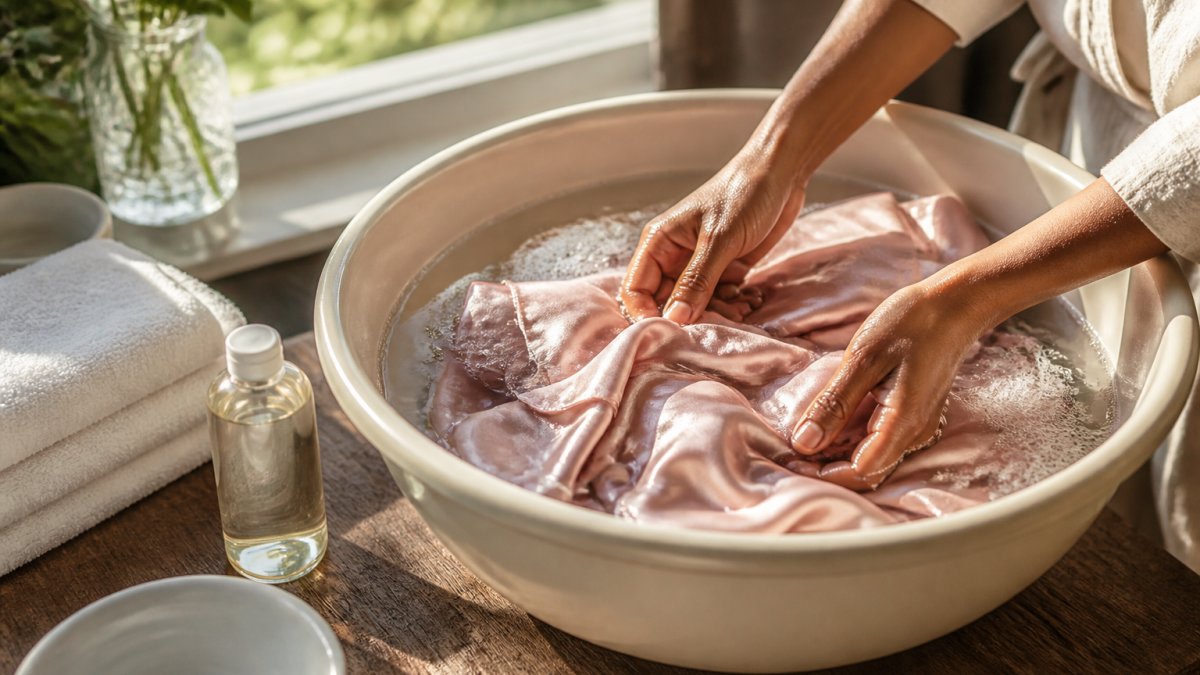
Hand washing is always the safer choice for silk robes. It gives you complete control over water temperature, agitation, and detergent concentration, while machine washing subjects silk to friction and spinning.
If you must use a machine:
- Place your robe inside a mesh laundry bag
- Use the delicate cycle with cold water
- Skip the spin cycle or set it to the lowest setting
Hand washing takes five to ten minutes. Fill a basin with cool or lukewarm water, submerge your robe, soak two to three minutes, and gently agitate with a soft, swishing motion, coaxing, not scrubbing.
Choosing the Right Detergent and Water Temperature
Water temperature matters more than most people realize. Cold water is ideal. Lukewarm water is acceptable. Hot water damages silk fibers and can cause dyes to bleed, especially on darker robes.
For detergent, choose one formulated for delicate fabrics:
- A mild silk-specific detergent is best
- Baby shampoo works in a pinch (it's gentle and effective)
- Avoid regular laundry detergent, which is too harsh
Use less detergent than you think you need; silk absorbs soap quickly, and residue makes it feel stiff and dull.
How to Remove Stains from Silk Robes
Stains happen, body oil, deodorant, makeup, massage oil, even on the finest robes. Address them before the full wash, and match the method to the stain type.
First: Read the Care Label and Identify the Stain Type
Before you touch the fabric, check the care label. If it says "dry clean only," blot the surface with a dry white cloth and take the robe to a professional who handles silk. If hand washing is permitted, proceed with the type-specific steps below.
Identify the stain while the fabric is dry and in good light:
- Body oil and massage oil: dark, translucent patches at the neckline, chest, cuffs, and anywhere skin or product contacts the robe. These are the most common silk-robe stains.
- Deodorant: white, chalky film or a yellowed ring under the arms.
- Makeup: tinted smudges from foundation, blush, or lipstick, usually at the collar or cuffs.
Treating Body Oil and Massage Oil
Oil is the hardest stain to lift from silk because the fiber absorbs it, and water alone won't break it down. A small amount of mild detergent or a drop of clear, fragrance-free dish liquid emulsifies the oil so it can be rinsed away.
- Lay the robe flat and place a clean white towel underneath the stained area to absorb what lifts out.
- Apply one drop of mild silk detergent or clear dish liquid to a clean white cloth, not directly to the robe.
- Blot with a pressing motion, working from the outside of the stain toward the center so you do not spread the oil.
- Let the detergent sit for 10 to 15 minutes so it can break the oil's bond with the fiber.
- Blot with a second cloth dampened with cool water to rinse the soap away.
- Repeat once if the mark is still visible, then air-dry the area before the full wash.
For a soaked-in massage-oil patch, dab on a paste of baking soda and water for five minutes before applying detergent, then rinse thoroughly to avoid chalky residue.
Treating Deodorant and Makeup
Deodorant is often a combination of wax, powder, and fragrance that sits on the surface. Makeup is pigment suspended in oil or wax. Both respond to the same gentle lift, but makeup needs a lighter touch so pigment does not spread.
- Deodorant: dampen a white cloth with cool water and a single drop of mild detergent. Blot the film away, then rinse with a clean damp cloth. For a yellowed ring, a short soak in cool water with mild detergent for five minutes can help before the full wash.
- Makeup: do not rub. Blot the pigment with a dry white cloth first to lift what sits on top, then use a cloth dampened with cool water and a trace of mild detergent. Work from the edge of the stain inward. Rinse with a clean damp cloth and air-dry.
Pre-Treating Before the Full Wash
Pre-treatment is your secret weapon for preserving silk. It removes surface stains so the full wash works less hard, and less agitation means less stress on the fibers.
After spot cleaning, let your robe rest one hour before the full wash so detergent can penetrate remaining marks.
For multiple stains or heavy soiling, soak the whole garment in cool water with mild detergent for up to five minutes, longer soaking weakens silk fibers.
How to Dry Silk Clothing Properly
Drying is where most people sabotage their silk robes. Heat, wringing, and direct sunlight are the enemies of silk longevity.
Removing Excess Water and Air-Drying Techniques
Never wring your silk robe. Wringing twists fibers and can cause permanent creasing. Instead, gently press the water out.
After washing:
- Lift the robe from the water and hold it loosely
- Use both hands to gently squeeze the fabric without twisting
- Lay the robe flat on a clean, dry towel
- Roll the towel loosely with the robe inside to absorb excess water
- Unroll after five minutes and hang the robe to air-dry
Hanging is the ideal drying method. Use a padded hanger to avoid stress on the shoulders. Hang your robe in a cool, well-ventilated space.
Avoiding Heat, Direct Sunlight, and Wringing
Direct sunlight fades silk dyes and weakens fibers over time. Hang your robe indoors, away from windows. A shaded corner of your bedroom or bathroom works perfectly.
Never use a dryer, apply heat, or iron a damp silk robe. If wrinkles appear after air-drying, hang the robe in a steamy bathroom (not under running water) for 15 to 20 minutes; steam relaxes wrinkles without heat damage.
The Royal Wrap™ — Luxury Mulberry Silk Robe →
Air-drying takes 4 to 8 hours depending on humidity and air circulation, this is how silk stays soft.
How to Store Silk Robes to Preserve Softness
Storage is the final pillar of silk robe care; stored correctly, a robe stays soft and vibrant for decades.
Store your silk robe in a cool, dry place away from direct sunlight.
Use a breathable cotton or silk garment bag, not plastic, which traps moisture and causes mildew.
Hang your robe on a padded hanger rather than folding it, since folds become permanent creases.
Keep your robe away from direct heat sources, strong light, and strong odors.
Restoring Softness and Troubleshooting Common Issues
Even with perfect care, silk can lose softness or develop issues. Most problems are reversible; check the care label first, then match your symptom to the fix below.
Care-Label Decision Tree
Before you try any fix, read the label inside the robe. It tells you what the maker will stand behind.
- "Dry clean only": do not wash at home. Take the robe to a cleaner who handles silk. For stiffness or spots, ask for a gentle hand-finish rather than a standard dry-clean cycle.
- "Hand wash cold" or "hand wash separately": follow the hand-wash routine in this guide and use the symptom fixes below.
- "Machine wash delicate" with a mesh bag: you may use the delicate cycle with cold water and no spin, but hand washing remains the safer choice for preserving softness.
Symptom-by-Symptom Fixes
Stiffness after washing. Stiff silk usually means soap residue remains.
Shrinkage. Silk can shrink slightly with heat and agitation.
Color bleeding. Most common with dark robes during the first few washes.
Water spots. These are mineral deposits left behind when tap water dries.
Snags and pulls. A snag is a pulled fiber, not a tear.
Dull patches. Dullness usually comes from friction, residue, or over-washing.
Wash Frequency and Wear-Between-Washes Decision Chart
How often should you wash your silk robe? This depends on how you wear it and your skin.
| Wear Pattern | Wash Frequency | Best For |
|---|---|---|
| Daily wear, direct skin contact | Every 5-7 wears | Sensitive or oily skin |
| Regular wear with light layering | Every 10-14 wears | Most people |
| Occasional wear or special occasions | Every 20+ wears | Minimal wear, dry skin |
| Postpartum or recovery wear | Every 3-5 wears | Frequent skin contact, healing |
You don't need to wash your robe after every wear; silk's tighter weave than cotton naturally resists odor.
If you notice body oil buildup, spot-clean those areas instead of washing the entire robe. This extends the time between full washes and reduces stress on the fibers.
Caring for Your Silk Robe as an Heirloom Investment
Your silk robe from Crowning Legacy by Ms. Carla is made to last. The Royal Wrap™ is crafted from 100% Grade 6A mulberry silk at 22 momme, designed for decades of wear.
This is the point of heirloom quality. Your robe is not disposable or a trend; it's a piece you pass down, a comfort you return to, a reminder that you deserve softness and authority in equal measure.
Care for your silk robe the way you care for yourself: with intention, gentleness, and respect.
Frequently Asked Questions
How often should you wash a silk robe?
Wash your silk robe every 4-7 wears, depending on how much direct contact it has with your skin. If you wear it over other clothing or use it briefly, extend to 7-10 wears. Spot-clean visible stains between washes to reduce the need for frequent full washes. This approach preserves the silk fibers and maintains softness longer.
Can you machine-wash a silk robe?
Hand washing is the safest method for silk robes and preserves softness and longevity. If you use a machine, select the delicate cycle with cold water and place the robe in a mesh laundry bag. Add only a silk-specific detergent or baby shampoo. Avoid the spin cycle, which can damage silk fibers. Hand washing gives you full control and is worth the extra care for an investment piece.
What detergent is safe for silk robes?
Use a mild silk detergent, baby shampoo, or a gentle wool wash. Avoid regular laundry detergent, bleach, and fabric softener, which damage silk fibers and strip natural oils that keep the fabric soft. Pour a small amount into your wash basin, silk requires very little detergent. Look for pH-neutral formulas designed for delicate fabrics to protect both color and texture.
How do you remove stains from a silk robe?
Blot stains immediately with a clean, damp cloth, never rub. For body oil or makeup, apply a tiny drop of mild detergent directly to the stain and let it sit for 5-10 minutes before gently working it in with cool water. Rinse thoroughly to remove all soap residue. For stubborn stains, repeat the process. If the stain persists after drying, spot-clean again rather than soaking the entire robe.
Your silk robe deserves care that honors its quality. The Royal Wrap™ from Crowning Legacy by Ms. Carla combines 100% mulberry silk with intentional design so every wash deepens its softness rather than diminishing it. Start with the right foundation, mulberry silk that's meant to last, and follow the care practices in this guide. Your robe, and your skin, will thank you.