


Table of Contents
- What Sets Mulberry Silk Apart From Mass-Market Alternatives
- How to Identify High-Quality Silk When Shopping
- Understanding Silk Fabric Weaves: Satin vs Crêpe de Chine
- Benefits of Mulberry Silk for Hair and Skin
- Silk Robe Care Instructions for Lasting Elegance
- Cost-Per-Wear Analysis: Why Luxury Silk Is an Investment
- Environmental Impact of Silk Production
- Conclusion
Last Updated: August 19, 2026
What Sets Mulberry Silk Apart From Mass-Market Alternatives
Mulberry silk differs fundamentally from mass-market alternatives in production and longevity. Bombyx mori caterpillars fed exclusively on mulberry leaves produce a protein fiber with natural properties that synthetics cannot replicate: superior breathability, moisture-wicking, and a hand-feel that improves with wear.
At Crowning Legacy by Ms. Carla, we use Grade 6A mulberry silk at 22 momme weight, the highest quality standard available. This creates pieces designed to be inherited, not replaced. Most mass-market alternatives cut corners at every stage, lower-grade silkworms, blended fibers, chemical processing that strips natural properties, and lower momme weights. The result feels luxurious for two weeks, then loses luster, pills, and frays.
Grade 6A Mulberry Silk vs Synthetic Satin
Grade 6A mulberry silk and synthetic satin are fundamentally different materials. Retailers often position synthetic satin as "silk-like" to blur this distinction.
Mulberry silk is a natural protein fiber from Bombyx mori silkworm cocoons. Grade 6A represents the highest classification, indicating minimal defects, superior luster, and optimal tensile strength. The fiber's molecular structure includes natural amino acids that interact with skin and hair in ways synthetics cannot.
Synthetic satin is polyester or nylon woven in a satin pattern. The weave creates smoothness, but the fiber itself lacks breathability, moisture-wicking, and hypoallergenic properties. Synthetic satin traps heat and moisture against skin, making it problematic for temperature sensitivity or night sweats. It slides against hair without reducing friction effectively, and degrades within months under repeated washing.
Mulberry silk becomes softer with proper care. It regulates temperature by absorbing and releasing moisture, keeping you cool without clammy sensations. For hair and skin, friction reduction is measurable, real silk reduces breakage and maintains moisture in ways polyester cannot. The price difference reflects reality: Grade 6A mulberry silk costs more because silkworms must be fed exclusively on mulberry leaves, cocoons must be processed carefully to preserve fiber length, and grading standards are rigorous.
Momme Weight and Fabric Durability
Momme weight measures grams per 100 square meters and is the most reliable indicator of whether a silk garment will last years or months. At 16-19 momme, you have lightweight silk suitable for scarves; at 22-25 momme, silk becomes genuinely protective and long-lasting. The Royal Wrap™ at Crowning Legacy by Ms. Carla uses 22 momme mulberry silk, providing optimal protection and longevity while maintaining softness and breathability.

Weave density works in concert with momme weight. A tight weave at 22 momme resists pilling, maintains seam integrity, and preserves structure through repeated wear. Always cross-reference momme weight with weave construction, a brand stating momme weight but refusing to discuss weave density is often hiding loose construction that won't last.
How to Identify High-Quality Silk When Shopping
Identifying authentic, high-quality mulberry silk requires moving beyond marketing language and examining the fabric itself.
Reading Fiber Composition Labels
Authentic mulberry silk should be labeled "100% mulberry silk" or "100% silk." Any percentage below 100% means blended fibers, compromising feel and functional benefits.
Be alert to misleading language. "Silk-like" or "satin finish" indicates synthetic material. "Charmeuse" or "habotai" are legitimate silk weave names. Grade designation should appear on the label, Grade 6A or Grade A indicates highest quality. Omitted grade designation usually means lower-grade silk. Look for "long-staple" or "filament silk" references; short-staple fibers are broken during processing and result in weaker fabric prone to pilling.

Testing Silk Quality: Luster, Hand-Feel, and Drape
Before purchasing, test these three qualities to reveal whether you're holding genuine mulberry silk or a convincing fake.
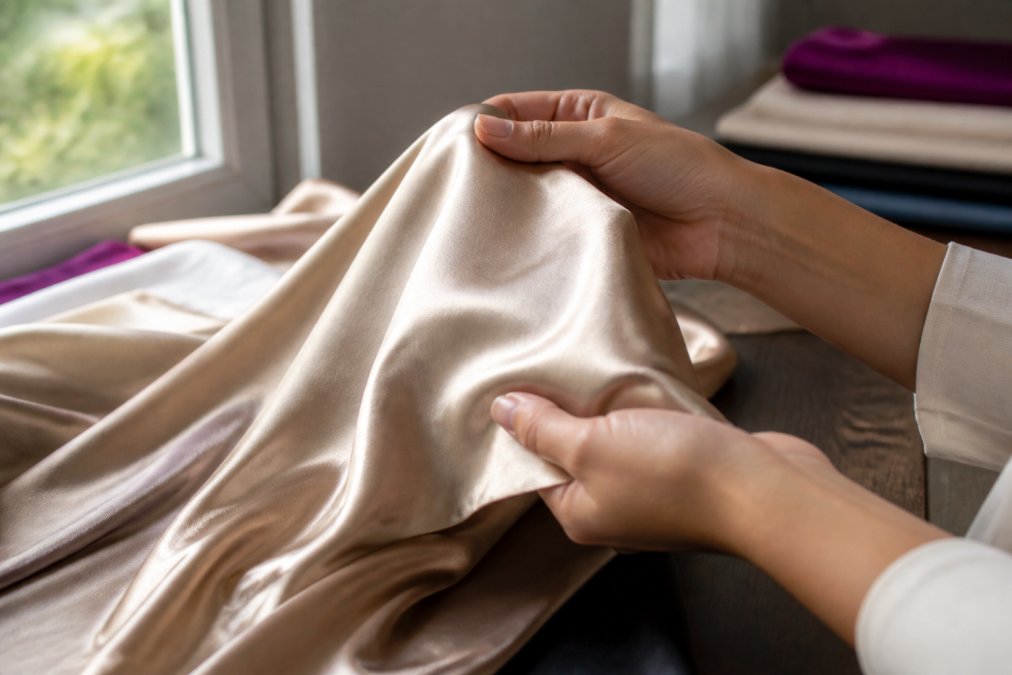
Luster is the natural shine created by silk's triangular prism structure reflecting light. Real mulberry silk has soft, luminous glow, not glossy shine like synthetic satin. Hold the garment under natural light and rotate it. Genuine silk shows depth and variation in light reflection.
Hand-feel describes how fabric feels against skin. Authentic mulberry silk has smooth, slightly cool sensation impossible to fake. It doesn't stick like synthetics do.
Drape is how fabric moves and falls. Mulberry silk has natural fluidity, flowing with your body. Lift the garment and let it fall. Silk flows smoothly; synthetics bunch or hold shape artificially. For bonnets and hair protection, feel the interior surface. Genuine silk has consistent smoothness throughout.
Understanding Silk Fabric Weaves: Satin vs Crêpe de Chine
The weave pattern determines how silk fiber is interlocked, affecting appearance, feel, and performance.
Satin weave floats warp threads over multiple weft threads, creating a smooth, lustrous surface ideal for robes and sleepwear because the smooth surface reduces friction against skin and hair. However, it's more prone to snagging and pilling if fiber quality is compromised.
Crêpe de Chine uses balanced weave with tightly twisted yarns, creating subtle texture and matte finish. The twisted construction creates natural elasticity and resists pilling better, though it's often used when durability is prioritized over maximum smoothness.
For hair and skin protection, satin weave mulberry silk is superior because the smooth surface genuinely reduces friction. The critical factor is that both weaves must be constructed from Grade 6A mulberry silk. A crêpe de Chine made from lower-grade silk will disappoint.
How Weave Density Affects Longevity
Weave density, the number of threads per square inch, directly determines how long your silk garment will last. Tighter weaves lock fibers together more securely, resisting pilling, fraying, and degradation under repeated washing and wear.
A loose weave at 22 momme will feel soft initially but deteriorate faster than a tight weave at the same weight. The Royal Wrap™ at Crowning Legacy by Ms. Carla uses tight satin weave construction at 22 momme, balancing maximum softness with genuine durability. When evaluating silk products, ask about weave density if it's not specified.

Benefits of Mulberry Silk for Hair and Skin
Mulberry silk's natural properties interact with hair and skin in measurable ways that synthetic alternatives cannot replicate.
Friction Reduction and Hair Protection
Hair breakage occurs when friction pulls on the hair shaft, causing the cuticle to lift and crack. Cotton and synthetic materials create high friction; hair catches and snags throughout the night, leading to breakage, split ends, and frizz.
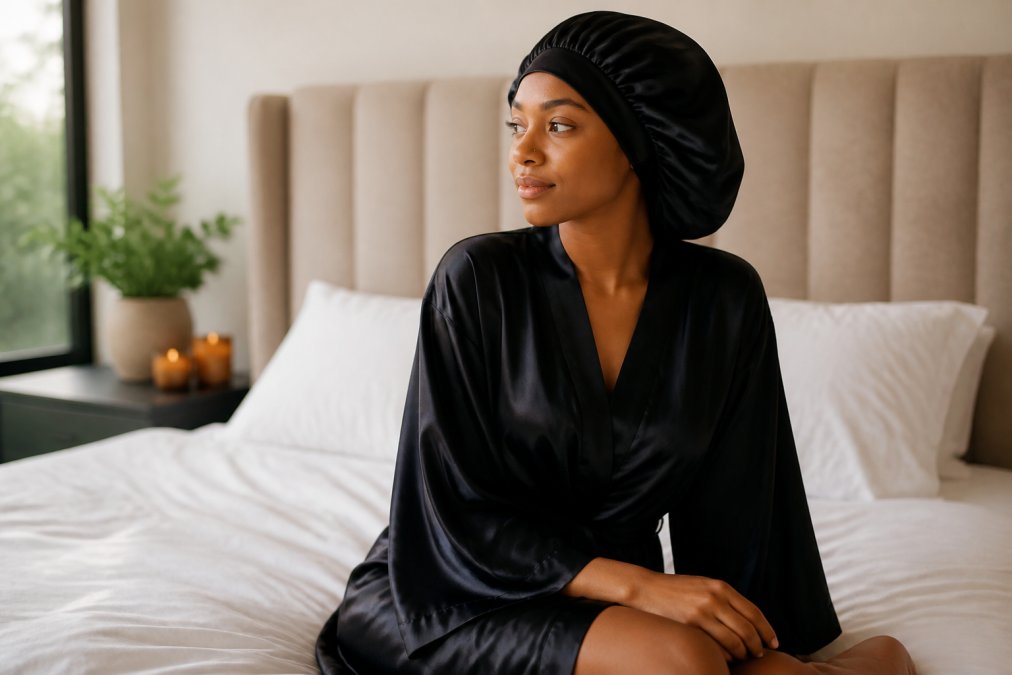
Mulberry silk's smooth surface reduces friction dramatically. The fiber's natural lubricity allows hair to glide across the fabric without catching. This is particularly critical for textured hair types, where friction-induced breakage is a constant concern. People who switch from cotton pillowcases to silk bonnets report visible reduction in breakage within weeks.
The Whispered Crown™ at Crowning Legacy by Ms. Carla is constructed from double-layer Grade 6A mulberry silk to maximize this protective benefit. Extended mulberry silk ties replace elastic, eliminating tension and pulling that elastic bonnets create around the hairline and crown.
Temperature Regulation and Skin Sensitivity
Mulberry silk regulates temperature through moisture management. The fiber absorbs moisture vapor from skin without feeling wet, then releases it into the air. For people experiencing night sweats, particularly those navigating perimenopause or postpartum recovery, this distinction is profound. Synthetic satin traps moisture against skin, intensifying the sweating response. Mulberry silk manages moisture, reducing temperature fluctuation severity throughout the night.
The fiber's natural protein composition makes it hypoallergenic. Mulberry silk doesn't irritate sensitive skin the way synthetics can. For postpartum skin that's often inflamed, reactive, and unpredictable, mulberry silk provides a gentle surface that won't trigger irritation. The fabric's natural pH is closer to human skin pH than synthetic alternatives, reducing friction-related inflammation. Breathability is the underlying factor, mulberry silk breathes; air passes through the weave structure. Over an eight-hour sleep cycle, this difference compounds.
Silk Robe Care Instructions for Lasting Elegance
How you care for your mulberry silk robe determines whether it remains beautiful and functional for years or deteriorates within months.
Machine Washable Silk vs Dry Clean Only
Many luxury silk garments carry "dry clean only" labels, which often reflects conservative liability positioning rather than actual fiber requirements. Grade 6A mulberry silk can be machine washed if done correctly.
Machine washing at a gentle cycle with cold water, using silk-specific detergent, poses minimal risk to high-quality mulberry silk. Standard laundry detergent is too alkaline and strips the silk's natural properties. Dry cleaning uses harsh chemical solvents that can degrade silk fibers over time. The Royal Wrap™ is designed to withstand gentle machine washing, making it accessible for regular care without the expense and chemical exposure of dry cleaning.
Protecting Seam Integrity and Preventing Pilling
Seams experience stress from body movement, and if stitching is compromised, the seam will separate. High-quality silk robes use silk thread in seams, not polyester. Wash inside-out in a mesh laundry bag to minimize external friction that stresses seams. Use cold water and gentle cycle. Avoid wringing or twisting; instead, gently squeeze out excess water.
Pilling occurs when short fibers on the fabric surface ball up and stick to the weave. Grade 6A mulberry silk with tight weave construction resists pilling significantly. If minor pilling occurs, use a silk-specific fabric comb or depiller. Air dry your robe flat or hanging in a location with air circulation but away from direct sunlight. Store on a padded hanger in a breathable garment bag, avoiding plastic bags that trap moisture.
Cost-Per-Wear Analysis: Why Luxury Silk Is an Investment
The Royal Wrap™ at $280 or The Legacy Set™ at $333 seems substantial until you calculate cost-per-wear over the garment's lifespan.
A mass-market synthetic satin robe costs $40-60 and lasts approximately 18-24 months with regular use. Cost-per-wear: $0.13-0.20. The Royal Wrap™ at $280, designed for decades of use with proper care, easily achieves 2,000+ wears over a 20-year lifespan. Cost-per-wear: $0.14. The numbers are comparable, but the quality of those wears is fundamentally different. You're wearing a garment that improves with age rather than degrades.
Consider also the functional benefits. A luxury mulberry silk robe reduces hair breakage, regulates temperature, protects sensitive skin, and provides comfort during vulnerable life phases, postpartum recovery, perimenopause, postoperative care. The Legacy Set™ at $333 combines The Royal Wrap™ with The Whispered Crown™ bonnet, providing comprehensive hair and skin protection.
Environmental Impact of Silk Production
Sericulture requires significant land and resources. Mulberry trees are typically cultivated in monoculture plantations, reducing biodiversity. Water use is moderate compared to synthetic fiber production. Silk production involves heating cocoons to kill pupae inside before the moth emerges, preventing damage to the silk filament.
However, mulberry silk's environmental profile improves significantly when considering longevity. A synthetic satin robe lasting 18 months and ending in a landfill has higher environmental cost than a mulberry silk robe worn for 20 years. The per-wear environmental impact of luxury silk is substantially lower than fast-fashion alternatives. Responsible silk producers maintain better labor standards and environmental practices than mass-market synthetic manufacturers.
The distinction between mulberry silk and mass-market alternatives comes down to intention. Mass-market brands prioritize profit margins and rapid turnover. Luxury silk brands like Crowning Legacy by Ms. Carla prioritize longevity, functionality, and the experience of wearing something genuinely beautiful.
When you choose Grade 6A mulberry silk at 22 momme weight, as featured in The Royal Wrap™ and The Whispered Crown™, you're choosing a garment designed to support you through transitions, protect your wellness, and be passed forward. That's a practical investment in pieces that earn their cost through years of reliable performance and genuine comfort.
Frequently Asked Questions
How do I know if silk is truly 100% mulberry silk and not synthetic satin?
Check the fiber composition label for 100% mulberry silk. Grade 6A mulberry silk has a natural luster and smooth hand-feel that synthetic satin cannot replicate. Authentic mulberry silk should feel cool to the touch and drape fluidly without stiffness. Look for a momme weight between 19-25, which indicates quality filament silk. Synthetic alternatives often feel plastic-like and lack the breathability of natural silk.
What is momme weight, and why does it matter for silk quality?
Momme weight measures silk fabric density, with higher numbers indicating thicker, more durable fabric. Grade 6A mulberry silk typically ranges from 19-25 momme. A 22-momme silk offers optimal balance between durability and fluidity. Lighter weights (under 16 momme) feel delicate but wear out faster. Heavier weights provide exceptional longevity and are ideal for heirloom pieces designed to be inherited and worn for years.
Will mulberry silk actually help with night sweats and temperature regulation?
Yes. Mulberry silk is a natural protein fiber with inherent breathability and thermal regulation properties. It absorbs moisture without feeling damp and releases heat efficiently, making it ideal for perimenopause and postpartum temperature fluctuations. Unlike synthetic alternatives, mulberry silk maintains these properties through repeated wear and washing, providing consistent comfort over time.
How should I care for a luxury silk robe to ensure it lasts for years?
Hand wash or use a delicate cycle with cold water and pH-neutral soap. Air dry flat or hang to prevent stretching. Avoid direct sunlight and heat sources. For Grade 6A mulberry silk with proper care, your robe can last decades. Protect seams by washing inside-out, and store in breathable fabric bags. Some luxury mulberry silk robes tolerate gentle machine washing on delicate settings, but always check care labels for specific instructions.
Why is The Legacy Set™ a better investment than cheaper silk alternatives?
The Legacy Set™ combines Grade 6A mulberry silk (22 momme) in both the robe and bonnet, ensuring consistent quality and durability. At $333.00, the cost-per-wear becomes minimal over years of use. Cheaper alternatives often use lower-grade silk or synthetic satin that pills, loses luster, and requires replacement within months. Heirloom-quality pieces like The Legacy Set™ are designed to be inherited, making them true investments in lasting elegance and ancestral legacy.
This article was written using GrandRanker