


Table of Contents
- Why It Matters to Spot Fake Silk
- The Burn Test for Silk Authentication
- Mulberry Silk vs. Satin: Know the Difference
- The Touch and Feel Test
- Momme Weight Explained: What It Tells You
- The Luster and Sheen Test
- The Ring Test and Label Inspection
- Red Flags That Signal Fake Silk
Last Updated: August 18, 2026
Why It Matters to Spot Fake Silk Products
Counterfeit silk floods the market. Sellers market synthetic polyester, viscose, and rayon as premium mulberry silk, banking on most consumers not knowing the difference. The consequences aren't trivial, you're paying luxury prices for materials that don't deliver the benefits you're paying for.

Real mulberry silk offers genuine advantages. It's a protein fiber with natural thermoregulation properties, meaning it adapts to your body temperature whether you're managing postpartum night sweats or navigating perimenopause. The natural sheen comes from the structure of the fiber itself, not a chemical coating. Synthetic alternatives lack these qualities entirely.
At Crowning Legacy by Ms. Carla, we understand that knowing how to spot fake silk products protects your investment in quality sleepwear. When you invest in pieces designed to be worn, inherited, and remembered, authenticity matters. This guide walks you through seven practical tests you can perform at home to verify what you're actually buying.
The stakes are personal. A bonnet that slips off your head defeats its purpose of protecting your textured hair overnight. A robe that irritates sensitive postpartum skin undermines the comfort you need during a vulnerable time. Testing for authenticity before purchase means you get exactly what you're promised.
The Burn Test for Silk Authentication
The burn test is the most reliable quick authentication method. Real silk burns with a specific signature that synthetics cannot replicate.
Here's how to perform it correctly. Cut a small swatch from an inconspicuous area of the fabric, a corner seam works well. Hold the fabric with tweezers over a flame (a lighter or candle works) and observe what happens. Real mulberry silk burns slowly, producing fine ash that crumbles easily between your fingers. The smell is distinctive: like burning hair, which makes sense since silk is a protein fiber made from cocoon filament.
Synthetic polyester behaves completely differently. It melts rather than burns, creating a hard plastic residue that clings to itself. The smell is chemical and acrid, nothing like burnt hair. Viscose and rayon fall somewhere in between, they burn but leave a different ash pattern and smell.
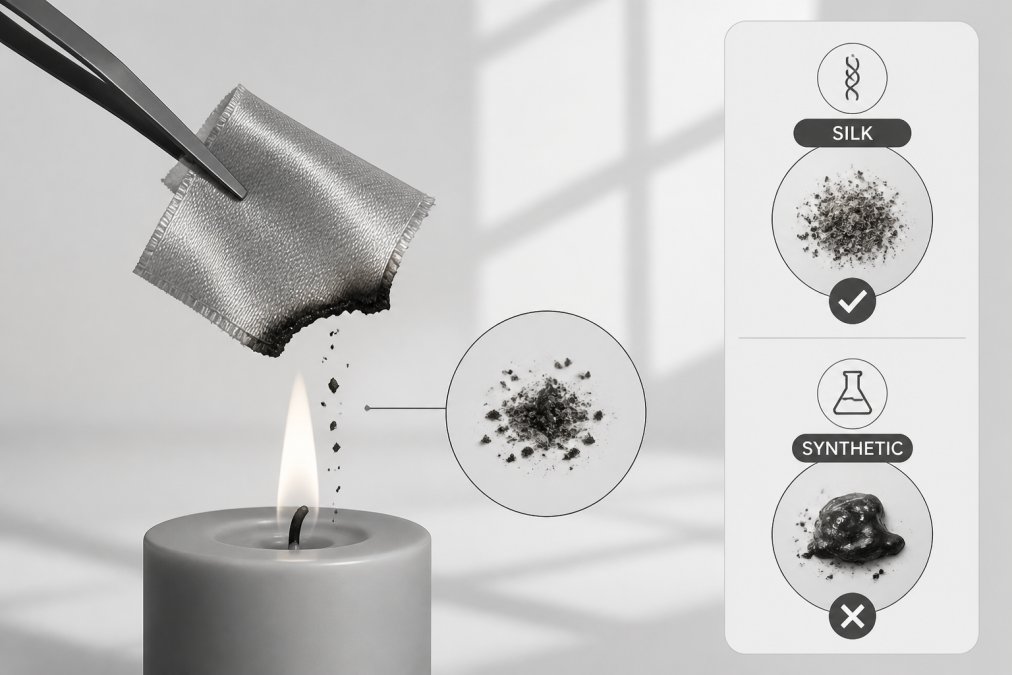
What makes this test reliable is that the difference is unmistakable once you've seen it. You cannot fake the protein-based burn signature of real silk. The ash pattern, the smell, the way it crumbles, these are all tied to the fundamental chemistry of the fiber itself.
A caution: this test requires destroying a small piece of fabric, so only use it on items you haven't purchased yet or on samples provided by the seller. Never burn a finished garment you're evaluating for purchase without explicit permission.
Mulberry Silk vs. Satin: Know the Difference
This distinction trips up most consumers. Satin is a weave pattern, not a fiber type. You can make satin from polyester, nylon, rayon, or silk. Understanding this difference is crucial for spotting fake silk products.
Mulberry silk refers to the fiber itself, specifically, silk produced by Bombyx mori silkworms fed exclusively on mulberry leaves. This diet produces the finest, strongest filament with the most lustrous natural sheen. When manufacturers weave mulberry silk using a satin weave pattern, you get mulberry silk satin, the gold standard for luxury sleepwear.

Many sellers market polyester satin as "silk satin" or simply "silk." The weave looks similar to the untrained eye, but the fiber properties are fundamentally different. Polyester satin has a shiny surface coating that can wear off with washing. Mulberry silk's natural luster comes from the fiber structure itself and actually improves with proper care over time.
Real mulberry silk drapes differently than synthetic satin. It has a fluid, almost liquid quality to its movement. Polyester satin feels stiffer and more plastic-like. Run your hands over the fabric, does it feel like it's moving with your hand, or does it feel like you're sliding your hand over a smooth plastic surface? That tactile difference is telling.
The shifting sheen test reveals the difference too. Tilt a piece of mulberry silk under light and watch the sheen shift subtly as the angle changes. This happens because light interacts with the protein fiber structure in a way unique to silk. Polyester satin's shine stays relatively static, it's a surface effect, not a fiber property.
The Touch and Feel Test
Your hands know the difference between real and fake before your eyes do. Mulberry silk has a specific hand-feel that synthetics struggle to replicate convincingly.
Real mulberry silk feels smooth and cool against your skin. There's a subtle grip to it, not sticky, but not slippery either. When you pinch a piece of mulberry silk, it holds the pinch momentarily before releasing, showing the fabric has some weight and substance. The drape is fluid and organic, like water moving through fabric rather than stiff material being shaped.
Synthetics feel different in nearly every way. Polyester feels slippery and plastic-like, almost waxy. Viscose feels softer than polyester but lacks the cool sensation and the subtle grip of real silk. Rayon falls somewhere between, but the overall tactile experience is noticeably different from genuine mulberry silk.
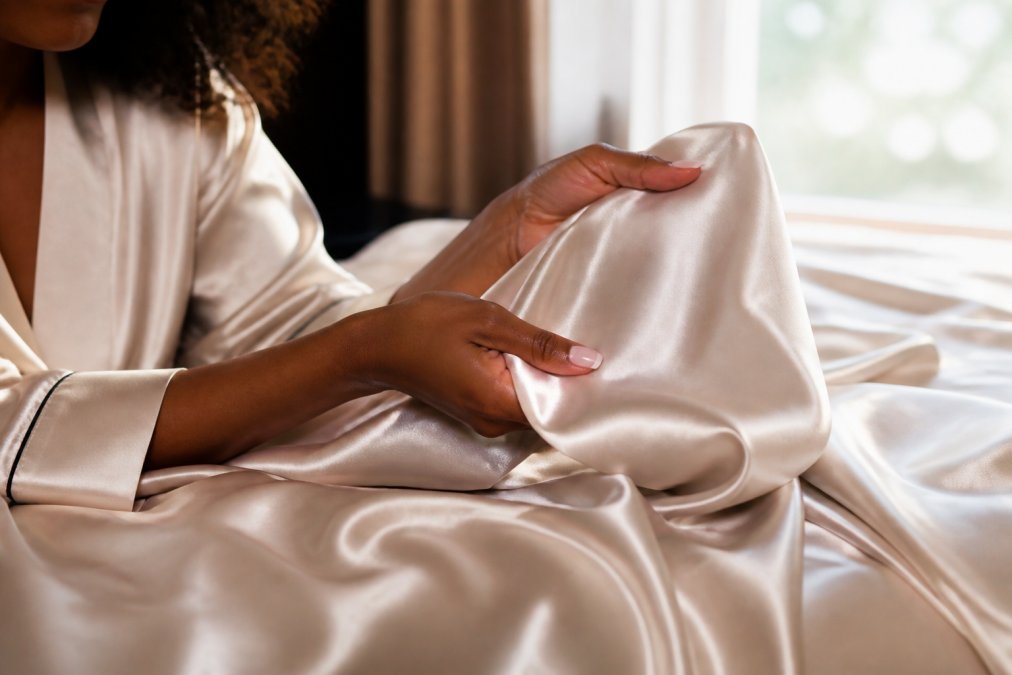
Pay attention to static electricity too. Real silk is naturally conductive because of its protein structure, so it resists static buildup. Synthetics generate static readily, if you rub the fabric and it clings to your hand afterward, that's a red flag. This matters especially for bonnets, where static-prone fabrics defeat the purpose of protecting textured hair overnight.
Temperature is another clue. Hold the fabric against your cheek. Real mulberry silk feels cool and adapts quickly to your body temperature. Synthetics feel room-temperature and don't adjust. For someone managing night sweats or temperature regulation issues, this difference is functional, not just aesthetic.
Momme Weight Explained: What It Tells You
Momme weight is the standard measurement for silk thickness and quality. Understanding this metric helps you spot fake silk products because it's a specific, verifiable standard that synthetics don't meet the same way.
Momme weight measures the weight of a piece of silk fabric that's 45 inches wide and 100 yards long, expressed in pounds. Real mulberry silk typically ranges from 12 to 30 momme. Most luxury sleepwear uses 16-22 momme silk, heavy enough to have substance and durability, light enough to drape beautifully.
Lower momme weights (under 12) indicate thinner, more delicate silk that wrinkles easily and wears faster. Higher momme weights (over 25) indicate thicker, more durable silk that lasts longer and resists wrinkling better. For a robe or bonnet designed to be inherited, you want at least 16 momme.
Synthetic fabrics don't use momme weight as a standard, which is itself revealing. If a seller claims their product is "silk" but lists no momme weight and can't explain what it means, that's a warning sign. Real silk sellers know this metric because it's how the industry measures quality.
The relationship between momme weight and performance matters practically. A 19-22 momme mulberry silk bonnet will maintain its shape better through multiple washes and won't lose elasticity as quickly as lower-weight alternatives. The tensile strength, the fiber's resistance to breaking under stress, improves with momme weight, which means your investment actually lasts.
The Luster and Sheen Test
The natural luster of mulberry silk is unmistakable once you know what to look for. This test doesn't require destroying fabric, making it perfect for evaluating products before purchase.
Hold the fabric up to natural light and observe the sheen. Real mulberry silk has a soft, subtle luminosity that seems to come from within the fiber rather than sitting on the surface. The sheen shifts slightly as you tilt the fabric, this is the natural interaction of light with the protein fiber structure. The effect is elegant and understated, never harsh or plastic-looking.
Synthetic polyester satin has a brighter, more uniform shine that looks almost artificial. The sheen doesn't shift as much because it's a surface coating rather than a fiber property. Under direct light, polyester can look almost reflective, like you're looking at a polished plastic surface. That's not the look of real mulberry silk.
Viscose and rayon have a dull sheen compared to mulberry silk. They lack the luminosity and depth that makes silk look luxurious. If you compare swatches side by side, the difference becomes obvious, real silk looks alive, while synthetics look flat.
This test works especially well for evaluating bonnets and robes before purchase. Ask the seller for photos under natural light, or if you're shopping in person, move the item to a window. The lighting matters. Under fluorescent lights, the differences blur slightly. Under natural light, the distinction between real and fake becomes clear.
The Ring Test and Label Inspection
The ring test is simple and surprisingly effective. Slip a piece of the fabric through a ring (your wedding band, a regular ring, anything with a smooth interior). Real mulberry silk will pass through easily, bunching slightly as it goes. The fabric should gather together compactly on the other side.
Synthetics behave differently. Polyester tends to bunch more stiffly and doesn't compress as easily. Rayon and viscose compress better than polyester but still feel noticeably different from silk. The difference is subtle but consistent, once you feel it, you recognize it immediately.
Label inspection is equally important. Look for specific language. Real mulberry silk products should clearly state "100% mulberry silk" or "100% silk." If the label says "silk-like," "silk-feel," "silk finish," or "satin," you're looking at a synthetic or a blend. These terms are legal disclaimers that the product is not real silk.
Check the fiber composition breakdown. A legitimate silk product lists the percentage of silk content. If the label is vague or missing this information, ask the seller directly. Reputable brands like Crowning Legacy by Ms. Carla provide transparent fiber composition because authentic mulberry silk is the foundation of the product.
Care instructions also reveal truth. Real mulberry silk requires specific care, hand washing or delicate machine cycles, low heat drying, and gentle handling. If the label says "machine wash hot" or "tumble dry," you're holding a synthetic product. Mulberry silk's protein structure demands gentler treatment, and legitimate sellers acknowledge this in their care labels.
Red Flags That Signal Fake Silk
Certain markers consistently indicate you're looking at counterfeit or misrepresented silk. Learning to recognize these red flags prevents wasted money and disappointment.
Price that seems too low is the first warning. Real mulberry silk costs money. A bonnet for under fifty dollars or a robe under one hundred fifty dollars should raise immediate suspicion. The fiber itself, the production process, and the quality control required for genuine mulberry silk create real costs. If the price seems impossible, the product probably is.
Vague product descriptions are another red flag. Legitimate sellers describe their silk specifically, they mention momme weight, fiber origin, and care requirements. If a listing just says "luxurious silk" without specifics, dig deeper. Ask direct questions. Real brands answer them.
Images that don't show the fabric clearly are suspicious. Good product photography shows texture, drape, and sheen under natural light. If the images are heavily filtered, shot under artificial lighting only, or show the fabric from angles that obscure its actual appearance, the seller may be hiding something.
Sellers who can't explain the difference between their product and cheaper alternatives are problematic. A knowledgeable seller understands mulberry silk versus synthetics, knows their momme weight, and can articulate why their product justifies its price. If they give vague answers or dismiss your questions, that's a signal.
Claims of "machine washable silk" without qualification are misleading. Real mulberry silk can be machine washed on delicate cycles, but it requires specific care. If a seller emphasizes that their "silk" is "low-maintenance" or "machine washable like regular fabric," they're selling you something that isn't real silk. This matters because it indicates they're either lying about the fiber content or they've coated the silk with chemicals that compromise its benefits.
Inconsistent product photography is telling too. If the bonnet looks different in different photos, different sheen, different color tone, different texture, the images may be of different products or heavily edited. Legitimate sellers maintain consistent photography because they're showing you the actual product.
Knowing how to spot fake silk products protects your investment and ensures you get the benefits you're paying for. Real mulberry silk offers genuine advantages for comfort, durability, and care that synthetics cannot match. When you're choosing pieces designed to become heirlooms, like the luxury robes and bonnets from Crowning Legacy by Ms. Carla, authenticity is non-negotiable. The burn test, momme weight verification, and luster examination take minutes but save you from costly mistakes. Your skin, your hair, and your legacy deserve nothing less than genuine mulberry silk.

Frequently Asked Questions
What does real silk smell like when burned?
Real mulberry silk produces a smell similar to burnt hair when exposed to flame. This happens because silk is a protein fiber made from the cocoon of silkworms. If the fabric smells like burning plastic or melting synthetic material, it's likely polyester or another synthetic fabric. The protein-based composition of genuine silk creates this distinctive burnt hair odor that's a reliable indicator of authenticity.
How do you perform a silk burn test for authenticity?
Cut a small sample from an inconspicuous area of the fabric. Hold it with tweezers near a flame for 2-3 seconds without letting it touch the flame directly. Real mulberry silk will burn slowly, producing fine ash that crumbles easily. Synthetic fabrics will melt, shrink, or form plastic beads. The ash from real silk should be black and powdery, never sticky or melted. Always perform this test in a safe, controlled environment away from flammable materials.
What is momme weight and why does it matter for silk quality?
Momme weight measures the density and quality of silk fabric, expressed as weight per 100 yards. Higher momme weight indicates thicker, more durable silk with better tensile strength. Luxury mulberry silk typically ranges from 19-25 momme for robes and bonnets. Lower momme weights (under 12) often signal cheaper, thinner fabrics or synthetic blends. Checking the momme weight on the label helps you verify you're getting genuine, high-quality mulberry silk that will last through years of wear and washing.
How can you tell the difference between mulberry silk and satin?
Mulberry silk is a natural protein fiber with a lustrous sheen and smooth hand-feel that feels cool to the touch. Satin is a weave pattern that can be made from synthetic polyester or rayon, creating a shiny appearance but lacking silk's natural properties. Real mulberry silk has a shifting sheen that changes with light direction, while satin often looks uniformly shiny. Mulberry silk is thermally conductive and helps regulate temperature, while synthetic satin does not. Check the fiber composition label, authentic mulberry silk will state '100% mulberry silk,' not 'satin' or 'polyester.'
This article was written using GrandRanker