


Last Updated: October 25, 2026
Quick Summary
To keep hair moisturized overnight, mist your hair with water until damp, apply leave-in conditioner from mid-length to ends, seal with oil or butter, choose a loose protective style like braids or a bun, and wear a silk bonnet or sleep on a silk pillowcase to prevent friction and moisture loss.
- Water hydrates hair first; oil and butter seal moisture in but don't add it.
- Apply products in order: water, leave-in conditioner, then oil or cream for best results.
- Use dime to half-dollar sized amounts of oil depending on hair length to avoid greasy buildup.
- Silk bonnets and pillowcases prevent cotton from absorbing moisture and causing friction damage.
- Most people need to re-moisturize every one to three nights depending on hair type and air conditions.
Table of Contents
- Why Hair Loses Moisture While You Sleep
- How to Moisturize Dry Hair Before Bed
- How to Keep Natural Hair Moisturized Overnight
- How to Protect Hair While Sleeping
- The 5-Step Overnight Routine to Keep Hair Fresh Overnight
- Troubleshooting Morning-After Dryness and Product Buildup
- Choosing Your Silk Bonnet for Overnight Hair Protection
- Frequently Asked Questions
Why Hair Loses Moisture While You Sleep
Your hair loses moisture every night. Cotton pillowcases absorb water from hair and skin, friction from tossing and turning breaks the cuticle, and your scalp stops producing oils during sleep.
It hits hardest if you have textured, natural, or already-dehydrated hair. What you do before bed determines how your hair looks the next morning.
The good news: a solid overnight routine helps you keep hair moisturized overnight, and means you wake up with softer, healthier-looking hair.
How to Moisturize Dry Hair Before Bed
Dry hair needs water first. Not oil. Not butter. Water.
Oils seal moisture in but don't add it, so hydrate with water or a water-based product before you seal anything. The order matters more than the brand.
What each product actually does
Think of bedtime moisturizing as a three-job system: water hydrates, leave-in hydrates and conditions, oil or butter seals, and cream adds slip. Skip the water and go straight to oil, and you lock dryness in.
- Water, the only ingredient that adds moisture to the hair shaft. A spray bottle of filtered water is cheapest and most controllable. Mist until damp, not dripping.
- Leave-in conditioner, water plus conditioning agents (glycerin, panthenol, or light silicones). Adds moisture and slip so you can distribute product without tugging. Apply mid-length to ends.
- Spray conditioner, a thinner leave-in mist. Easier to distribute on fine or wavy hair, and good when cream leave-in feels heavy.
How to layer them at bedtime
The sequence is water, then leave-in, then oil or cream:
- Mist hair with water until damp.
- Apply leave-in from mid-length to ends: quarter-sized for short hair, half-dollar for medium, full dollar for long.
- Seal with oil, ends upward: dime-sized for short hair, quarter-sized for medium, half-dollar for long.
- Add cream or butter only if hair still feels dry after oil. More product is not better; buildup weighs hair down.
When oil seals versus when it adds moisture
Oil never adds water; it only slows evaporation, which is why oil alone on dry hair leaves hair dry underneath. On damp hair, oil holds that water in; on bone-dry hair, you're sealing in dryness.
How much and how often
Most people need to re-moisturize every one to three nights, depending on hair type and indoor air. Fine hair needs less product and less frequent application; coily hair may need more. Start with the smallest amount above and add only if morning hair still feels dry, over-application is the most common cause of dull, heavy hair.
Benefits of Mulberry Silk for Natural Hair: 2026 Guide covers how silk protection works specifically for textured hair types.
How to Keep Natural Hair Moisturized Overnight
Natural hair needs extra care to keep hair moisturized overnight: your texture makes it harder for scalp oils to travel down the shaft, so ends dry out faster. The fix isn't more product, it's a repeatable bedtime routine tailored to your texture.
A bedtime routine by hair type
These steps assume damp hair, mist with water first if dry. Adjust amounts to your density and length.
Straight and wavy hair
- Mist with water until damp.
- Apply a light leave-in or spray conditioner from mid-length to ends, about a quarter-sized amount for shoulder-length hair.
- Seal with two to three drops of jojoba or argan oil, ends only.
- Loose braid or silk scrunchie bun. Silk pillowcase is usually enough; a bonnet is optional.
Curly hair
- Mist with water or refresh with a water-based spray.
- Apply leave-in conditioner in sections, a half-dollar amount total for medium-length hair.
- Seal with a quarter-sized amount of a medium oil such as coconut or sweet almond, focusing on ends.
- Pineapple the hair on top of your head with a silk scrunchie, or do two loose twists. Wear a silk bonnet.
Coily hair
- Section hair into four to six parts and mist each section with water.
- Apply leave-in conditioner section by section, a dollar-sized amount per section for long hair, less for short.
- Seal with a light layer of oil, then a small amount of cream or shea butter on ends.
- Two-strand twists, flat twists, or loose braids. Wear a silk bonnet and sleep on a silk pillowcase.
The LOC method, with amounts
LOC stands for Leave-in, Oil, Cream, layered in that order: leave-in adds moisture, oil seals it, cream adds slip and protection. The common mistake is using too much of each layer, start with the smallest amount above and add only if morning hair feels dry.
Focus on your ends
Your ends are the oldest part of your hair and need the most moisture. Apply heavier products to ends and mid-length, less on roots to avoid buildup. If your scalp gets oily quickly, skip oil near the roots entirely.
Troubleshooting morning-after dryness
If your hair still feels dry in the morning, check these in order:
- Not enough water. Water is the foundation. Mist more generously next time.
- Cotton friction. A cotton pillowcase absorbs moisture and roughens the cuticle. Switch to silk or satin.
- Dry indoor air. Winter heating and air conditioning pull moisture from hair. A humidifier in the bedroom can help.
Benefits of Mulberry Silk for Natural Hair: 2026 Guide covers how silk protection works specifically for textured hair types.
How to Protect Hair While Sleeping
Your pillowcase matters more than you think.
Silk and satin pillowcases solve this: they're smooth, so hair slides across them instead of catching and breaking, and they don't absorb moisture from your hair.
But a pillowcase alone isn't enough for most people, you need a second layer of protection: a silk bonnet.
A silk bonnet keeps hair in place, prevents it from touching the pillowcase at all, and keeps your hairstyle intact overnight.
The 5-Step Overnight Routine to Keep Hair Fresh Overnight
Follow these steps every night, and you'll see results within a week.
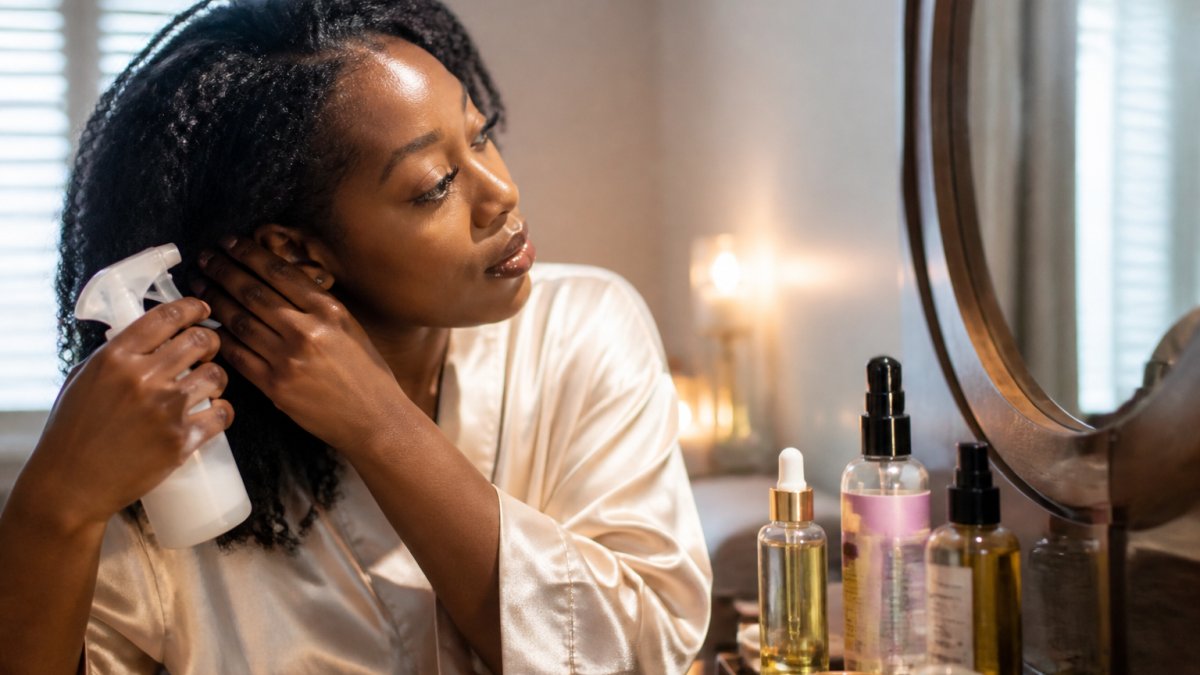
Step 1: Assess Your Hair's Moisture Needs
Before starting any routine, know what your hair needs:
- Is my hair dry, normal, or oily?
- Do I have fine hair, medium hair, or thick hair?
- Is my hair straight, wavy, curly, or coily?
Your answers determine which products you use and how much: fine hair needs lightweight products, thick coily hair needs richer moisturizers, and oily scalps need less near the roots. If unsure, start light, you can always add more, and too much product leads to dull, heavy buildup.
Step 2: Apply Water or Leave-In Conditioner
Dampen your hair with water or leave-in conditioner. Use a spray bottle for even distribution. Your hair should feel damp, not soaking wet.
If you use a leave-in conditioner, apply it to damp hair from mid-length to ends.
The Whispered Crown™ — Luxury Mulberry Silk Bonnet →
Work it through with your fingers or a wide-tooth comb. Make sure every section gets product. Pay extra attention to your ends, which dry out fastest.
Step 3: Seal in Moisture With Oil or Butter
Now that hair is hydrated, seal that moisture in with oil or butter, without it, the water evaporates and hair stays dry.
Choose one based on your hair type:
- Lightweight oils for fine hair: Argan oil, jojoba oil, almond oil
- Medium oils for normal hair: Coconut oil, sweet almond oil
- Rich butters for thick, coily hair: Shea butter, castor oil, avocado oil
Use less than you think you need: dime-sized for short hair, quarter-sized for medium, half-dollar for long. Too much makes hair greasy and heavy. Apply to ends first, working upward toward mid-length, and avoid roots unless your scalp is very dry, most scalps produce enough natural oil.
Step 4: Choose Your Protective Style
A protective style keeps hair safe from friction and moisture loss and keeps your hairstyle fresh overnight.
Good protective styles for sleeping:
- Braids: Loose braids, box braids, or cornrows. They keep hair contained and prevent tangling.
- Buns: High buns, low buns, or twisted buns. Secure with a silk scrunchie, not a rubber band.
- Twists: Two-strand twists or flat twists. They look polished and protect your hair.
The key is "loose." A tight style creates tension on your edges and hairline, causing breakage and hair loss over time. If it's tight enough to give you a headache, it's too tight.
Step 5: Wear a Silk Bonnet or Use a Silk Pillowcase
A silk bonnet covers your entire head. How To Keep Silk Bonnet On provides solutions if your bonnet tends to slip.
A silk pillowcase only covers where your head rests.
For maximum protection, use both: sleep on a silk pillowcase and wear a silk bonnet.
The Whispered Crown™ from Crowning Legacy by Ms. Carla is designed specifically for this step.
You can add The Whispered Crown™ to your routine to complete your overnight protection system.

Follow these five steps each night to keep your hair moisturized and protected while you sleep.
| Step | Action | Key Detail |
|---|---|---|
| 1 | Assess your hair's moisture needs | Know your hair type, texture, and scalp condition |
| 2 | Apply water or leave-in conditioner | Dampen hair; use quarter to dollar-sized amounts |
| 3 | Seal with oil or butter | Use dime to half-dollar sized amounts by length |
| 4 | Choose a protective style | Braids, buns, twists, or pineapple; keep loose |
| 5 | Wear silk bonnet or pillowcase | Prevents friction and moisture loss overnight |
Troubleshooting Morning-After Dryness and Product Buildup
You followed the routine perfectly, but your hair still feels dry in the morning. Here's how to fix it.
Your hair still feels dry:
Your hair feels greasy or heavy:
You used too much oil or butter, start with half the amount next time; less is better than too much.
Your bonnet keeps slipping:
A loose bonnet won't protect your hair.
Your edges look frizzy or broken:
Your protective style might be too tight, loosen your braids or bun; edges should not feel pulled.
Choosing Your Silk Bonnet for Overnight Hair Protection
Not all silk bonnets are equal: some use low-quality silk that doesn't last, and satin is cheaper but protects hair less well.
When choosing a silk bonnet, check these things:
- Material: Look for 100% mulberry silk, not satin or synthetic blends, the description should say "mulberry silk" specifically.
- Weight: Quality silk is heavier; look for 22 momme or higher for thickness and durability.
- Closure: Elastic creates tension and can break edges. Silk ties adjust for comfort without pressure.
5 Best Silk Bonnet Styles for Hair Protection in 2026 reviews specific styles to help you choose.
The Whispered Crown™ checks every box: 100% Grade 6A mulberry silk at 22 momme, extended silk ties that adjust precisely for a secure fit without tension, and double-layer construction for durability.
Frequently Asked Questions
Should you moisturize your hair before bed?
Yes. Moisturizing before bed seals hydration into your hair strands and reduces overnight moisture loss. Apply a water-based leave-in conditioner or spray, then seal it with oil or butter. This is especially important for dry hair, textured hair, and natural hair types that lose moisture quickly. The key is using the right amount, too much product causes buildup, while too little leaves hair dry by morning.
What's the best way to keep hair moisturized overnight without product buildup?
Use a lightweight leave-in conditioner or water spray instead of heavy creams, and apply only enough to coat your hair, not drench it. Follow with a small amount of natural oil like castor oil or avocado oil to seal moisture. Protective hairstyles like braids or twists also reduce friction and help retain moisture. If you have fine hair or an oily scalp, focus moisture on the mid-lengths and ends, avoiding the scalp. Rotate between light and heavier products to prevent buildup.
How does a silk bonnet help keep hair fresh overnight?
A silk bonnet reduces friction between your hair and a cotton pillowcase, which causes dryness and breakage. Unlike cotton, which absorbs moisture from your hair, mulberry silk is naturally breathable and helps regulate temperature. The Whispered Crown™ bonnet features extended silk ties that secure your hair without tension, protecting edges and preserving moisture all night. Silk also prevents your hairstyle from flattening or shifting, so your hair stays fresh until your next wash day.
Can I use the same overnight routine for all hair types?
The core steps are the same, hydrate, seal, and protect, but the products and amounts vary by hair type. Fine hair needs lightweight leave-in conditioner and minimal oil to avoid weighing hair down. Thick, coily, or textured hair can handle richer moisturizers and more oil for deeper hydration. Oily scalps benefit from focusing moisture on the ends and mid-lengths. Postpartum or sensitive skin requires hypoallergenic, breathable materials like mulberry silk to avoid irritation. Adjust product amounts based on your hair's response each morning.
Your overnight routine is the foundation of healthy hair. Water hydrates. Oil seals. A protective style and silk bonnet guard against friction and moisture loss. Follow these five steps consistently, and your hair will transform. You'll wake up with softer, shinier, healthier-looking hair every single morning. Start tonight with the routine that works.
