


Table of Contents
- What Makes a Luxury Mulberry Silk Robe Worth Buying
- Mulberry Silk Robe Momme Weight Explained
- Benefits of Wearing Silk Robes Every Day
- Design Features That Separate Heirloom Robes from the Rest
- Styling Your Silk Robe Beyond the Bedroom
- How to Wash a Silk Robe Without Damaging It
- Sustainable and Ethical Sourcing in Luxury Silk
- Conclusion
Last Updated: August 15, 2026
What Makes a Luxury Mulberry Silk Robe Worth Buying
A mulberry silk robe is crafted from silk produced exclusively by Bombyx mori silkworms fed on mulberry leaves, yielding longer, finer, and more uniform fibers than any other silk variety. That uniformity creates the characteristic lustrous finish and exceptional softness that synthetic alternatives cannot match. The difference between a cherished heirloom and one that disappoints comes down to three things: silk grade, weave construction, and momme weight.
Grade 6A Silk and Why It Matters
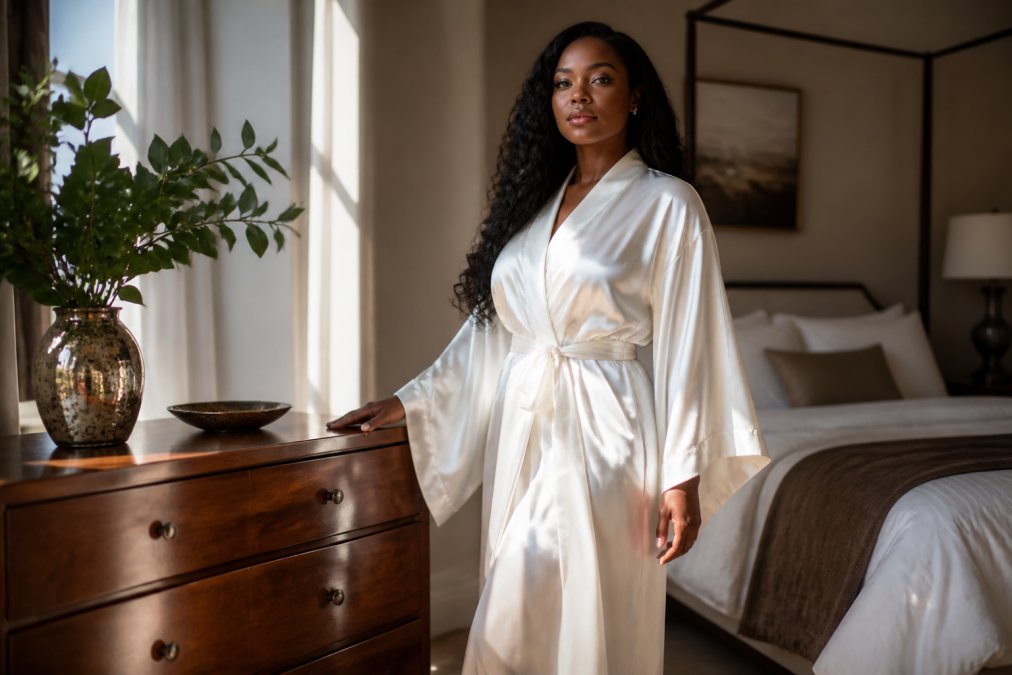
Grade 6A is the highest classification in the silk grading system, denoting the longest, most uniform, and least-defective fibers available. Most mass-market robes use Grade 3A or 4A silk. The difference is noticeable the moment you put the garment on: Grade 6A silk drapes with fluidity that feels weightless against the skin, while lower grades have a stiffer, coarser character that becomes more pronounced after washing. For anyone with sensitive or postpartum skin, this distinction is a practical necessity.
Charmeuse Weave vs. Other Silk Weaves
Silk charmeuse is a satin-weave fabric that produces a smooth, glossy face and duller back. It is the dominant weave choice for luxury sleepwear and robes because it maximizes the natural luster of mulberry silk while maintaining soft, fluid drape.
| Weave Type | Surface Feel | Drape | Best For |
|---|---|---|---|
| Charmeuse (satin weave) | Smooth, glossy | Fluid, flowing | Robes, lingerie, sleepwear |
| Habotai (plain weave) | Soft, lightweight | Less structured | Liners, scarves |
| Crepe de Chine | Matte, textured | Moderate | Blouses, lighter garments |
| Dupioni | Crisp, textured | Structured | Occasion wear |
Charmeuse wins for robes because the satin weave reduces surface friction against both skin and hair. This smooth surface is the mechanism behind silk's documented benefits for preventing hair breakage and minimizing facial creasing during sleep.
Mulberry Silk Robe Momme Weight Explained
Momme weight is the standard measurement for silk fabric density, equivalent to thread count for cotton. One momme represents the weight in pounds of silk measuring 45 inches by 100 yards. Higher momme means heavier, more durable, and more opaque fabric.
For luxury robes, the relevant range runs from 19mm to 30mm:
- 19mm: Lightweight and breathable, excellent for warm climates.
- 22mm: The sweet spot for most buyers, substantial enough to drape beautifully yet breathable year-round. Many high-end robes use 22mm Grade 6A long-fiber mulberry silk for this reason.
- 25mm-30mm: Maximum weight and opacity with exceptional durability, but warmer to wear. Better suited to cooler environments or buyers prioritizing longevity.
The most common mistake is assuming higher momme automatically means better quality. A 30mm robe made from Grade 3A silk will feel inferior to a 22mm robe made from Grade 6A silk. Momme and grade work together.
According to The Textile Exchange's fiber sourcing standards, transparency in silk sourcing and fiber specification is a growing benchmark for quality assurance in the luxury apparel sector.
Benefits of Wearing Silk Robes Every Day
Silk is a natural protein fiber composed of fibroin and sericin, and those amino acid structures interact with the body in ways synthetic fabrics cannot replicate.
Thermoregulation and Night Sweats During Perimenopause
Silk's thermoregulating properties make it the most practical choice for anyone experiencing night sweats during perimenopause. The fabric responds dynamically to body temperature: it insulates when cool and wicks moisture away when warm, keeping skin at a more stable temperature than cotton or synthetic alternatives.
Many women navigating perimenopause report that cotton absorbs sweat and holds it against the skin, creating a clammy experience that disrupts sleep. Silk's moisture-wicking structure moves perspiration away from the body while remaining breathable enough to prevent overheating. This benefit also extends to postpartum recovery, when hormonal fluctuations create similar temperature instability.
Skin Hydration, Hair Protection, and Allergy Sensitivity
Silk's natural sericin proteins are hypoallergenic, making the fabric unlikely to trigger allergic reactions in sensitive skin. This matters enormously for postpartum women whose skin barrier is often compromised, and for anyone with eczema-prone or reactive skin.
Unlike cotton, which draws moisture from the skin's surface, silk does not absorb the skin's natural oils or applied skincare products. This makes it genuinely beneficial for skin hydration.
For textured and coily hair types, the friction-reduction properties of charmeuse silk are significant. Cotton robes create surface friction that disrupts the hair cuticle, contributing to breakage, frizz, and moisture loss. Silk's smooth surface allows hair to move without resistance, preserving curl pattern and moisture retention.
The hypoallergenic designation applies specifically to mulberry silk. Wild silk varieties and synthetic satin do not carry the same properties.
Design Features That Separate Heirloom Robes from the Rest
Construction quality is where the gap between a beautiful-looking robe and a genuinely durable one becomes visible.
French seams are the standard for quality silk garments. A French seam encloses the raw fabric edge within the seam itself, preventing fraying without exposing the edge to abrasion.
Belts and closures should be self-fabric, meaning cut from the same silk as the robe body. A well-weighted self-belt in the same momme fabric will hold a knot without slipping and drape cleanly when untied.
Pockets are a practical necessity that many luxury robes omit. A robe designed for genuine daily use should include on-seam side pockets deep enough to hold a phone or small items without distorting the fabric. The pocket lining should also be silk or a comparable smooth fabric.
Kimono-style cuts offer a generous, adjustable fit that accommodates postpartum body changes and a range of body types without requiring precise sizing. The wrap construction means the robe can be worn open as a dressing gown or closed as a loungewear layer, extending its versatility significantly.
Crowning Legacy by Ms. Carla approaches each of these design elements with the understanding that a robe crafted with generational care must function as well in year five as it does on the first wearing.
Styling Your Silk Robe Beyond the Bedroom
A long silk robe worn over a fitted bodysuit or high-waisted trousers reads as deliberate loungewear styling, not undress. The key is proportion: a floor-length or mid-calf robe paired with a structured base layer creates an intentional layered look that works for home office settings, morning rituals, or relaxed entertaining.
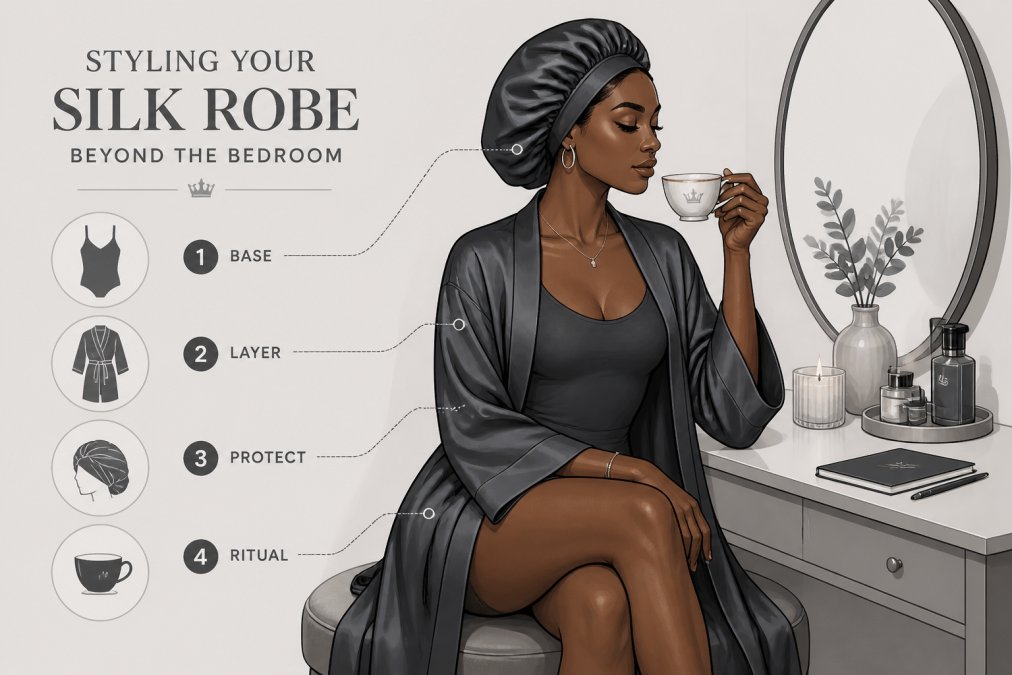
Specific styling approaches that work:
- Morning ritual wear: Worn open over pajamas or a slip dress during a slow morning, the robe becomes part of an intentional self-care aesthetic.
- Creative workspace layer: A richly colored silk robe over a simple fitted top creates a distinctive look for video calls and home office environments.
- Postpartum recovery uniform: For new mothers spending extended time at home, a beautiful robe elevates the experience of recovery and signals that rest and comfort are worthy of elegance.
- Gift presentation: A luxury mulberry silk robe presented in thoughtful packaging carries weight when the recipient understands it was chosen to last.
The "soft life" philosophy is not about passivity. It is about choosing quality over volume, intention over habit, and refusing to relegate luxury to special occasions.
How to Wash a Silk Robe Without Damaging It
Knowing how to wash a silk robe correctly is as important as knowing which robe to buy. Improper care is the most common reason expensive silk garments degrade prematurely.
Hand Wash and Delicate Cycle Instructions
Hand washing is the safest method for any mulberry silk robe. The process requires attention to a few non-negotiable rules:
- Use cool water only. Hot water degrades silk protein fibers and causes shrinkage. Keep the temperature at or below 30°C (86°F).
- Use a pH-neutral or silk-specific detergent. Standard laundry detergents are alkaline and will break down the sericin proteins that give silk its softness.
- Submerge and swirl gently. Do not scrub, wring, or twist the fabric. Agitation damages the weave structure and causes pilling.
- Rinse thoroughly in cool water. Detergent residue accelerates degradation.
- Press out excess water with a clean towel. Roll the robe in a dry towel and press firmly. Never wring.
- Dry flat or hang in shade. Direct sunlight fades silk rapidly.
For robes labeled machine washable, use the delicate cycle with cold water and a mesh laundry bag.
Long-Term Care and Durability Over Years of Wear
A Grade 6A mulberry silk robe at 22mm or higher momme weight, cared for properly, can remain in excellent condition for many years. The primary causes of silk degradation are heat, alkaline detergents, and prolonged sun exposure, not wear frequency.
Practical long-term care habits that extend robe life:
- Store folded in a breathable cotton bag, not a plastic garment bag.
- Iron on the lowest silk setting with a pressing cloth between the iron and fabric, or steam lightly from a distance.
- Address stains immediately with cool water and a gentle blot. Set stains are far more difficult to treat on silk.
- Rotate between two robes if wearing daily. This allows each garment to rest and recover its structure between wearings.
A robe maintained well over five years costs far less per wearing than a cheaper alternative replaced every eighteen months.
Sustainable and Ethical Sourcing in Luxury Silk
Silk is a natural protein fiber with inherent advantages over synthetic fabrics in terms of biodegradability and renewable sourcing. However, not all silk supply chains are equal in their environmental or labor practices.
The OEKO-TEX Standard 100 certification is the most widely recognized independent standard for textile safety. A robe carrying this certification has been tested for harmful substances including pesticides, heavy metals, and formaldehyde. This certification is particularly relevant for postpartum buyers and those with sensitive skin.
Ethical production in luxury silk also encompasses labor standards at the weaving and finishing stages. Handcrafted finishing, including hand-rolled hems and artisan seam work, supports skilled labor practices that mass production eliminates.
According to the Federal Trade Commission's textile labeling guidelines, any garment sold in the United States as "silk" must contain only silk fibers in the fabric described. Blends must be accurately labeled with fiber content percentages.
Sustainable fashion in the luxury segment increasingly means buying fewer, better items rather than frequent replacements. A mulberry silk robe crafted with genuine durability aligns with sustainable consumption principles precisely because it does not need to be replaced.
| Care Practice | Frequency | Impact on Longevity |
|---|---|---|
| Hand wash or delicate cycle | After every 2-3 wears | High: prevents fiber degradation |
| pH-neutral detergent | Every wash | High: preserves sericin proteins |
| Shade drying | Every wash | Medium: prevents color fading |
| Breathable storage | Ongoing | Medium: prevents yellowing |
| Pressing cloth when ironing | As needed | High: prevents heat damage |
For authoritative guidance on textile care standards, the American Cleaning Institute's fabric care guide provides detailed instructions on caring for delicate natural fibers including silk.
The challenge most buyers face is not finding a silk robe. It is finding one built to last, sourced honestly, and designed with the specific needs of their body and lifestyle in mind. Crowning Legacy by Ms. Carla was created to answer exactly that need: heirloom-quality mulberry silk robes crafted with generational care, combining ancestral elegance with the practical demands of postpartum recovery, perimenopause, and intentional daily living. Each piece is designed to be worn with authority, inherited with meaning, and remembered long after the first wearing. Add a Crowning Legacy piece to your collection and invest in comfort that does not compromise.
Frequently Asked Questions
What is the difference between mulberry silk and regular silk?
Mulberry silk comes exclusively from Bombyx mori silkworms fed on mulberry leaves, producing long, uniform filaments that create a smoother, stronger, and more lustrous fabric than wild or mixed-source silks. Regular silk is a broader term that can include tussah or blended fibers with shorter filaments, uneven texture, and less durability. When you buy a luxury mulberry silk robe, the consistent fiber length directly translates to softer contact against skin and a longer-lasting garment.
What does momme weight mean when buying silk robes?
Momme (mm) measures how much a standard bolt of silk weighs in pounds. A higher number means denser, heavier fabric. Robes in the 19-22 momme range offer the best balance of drape and durability for everyday wear, while anything below 16 momme tends to feel thin and wear out faster. For a mulberry silk robe intended as a long-term heirloom piece, look for at least 19 momme to ensure the fabric holds its structure and softness through repeated use.
Are mulberry silk robes machine washable?
Some mulberry silk robes are designed for machine washing on a delicate cycle in cold water with a gentle, pH-neutral detergent, but many higher-grade options still recommend hand washing or dry cleaning to preserve the natural protein fibers and lustrous finish. Always check the care label first. When machine washing, place the robe inside a mesh laundry bag, skip the spin cycle, and lay it flat to dry away from direct sunlight to prevent fiber damage and color fading.
Is a 100% mulberry silk robe worth the investment?
For anyone dealing with sensitive postpartum skin, perimenopause night sweats, or textured hair that needs friction reduction overnight, a 100% mulberry silk robe delivers practical benefits that synthetic alternatives cannot replicate. The natural sericin protein in silk is hypoallergenic and supports skin hydration. A well-made robe at the right momme weight also outlasts cheaper options by years, making the cost-per-wear far lower over time. Heirloom-quality pieces crafted with generational care hold both functional and sentimental value.
This article was written using GrandRanker