


Quick Summary
A silk bonnet breastfeeding routine reduces friction as you shift position during repeated night feeds, which helps keep postpartum hair from tangling and breaking. Silk lets hair slide rather than snag against the pillow. It protects hair while the growth cycle resets, but it does not stop postpartum shedding on its own.
- Night feeds mean repeated head movements that drag hair across cotton fabric.
- Mulberry silk offers a low-friction surface that helps hair slide rather than snag.
- A bonnet reduces tangling and breakage but does not stop postpartum shedding.
- Choose an adjustable bonnet with silk ties instead of tight elastic to avoid hairline pressure.
- Remove the bonnet before handing off or laying down your baby for safe sleep.
Table of Contents
- Why Night Feeds Are Hard on Postpartum Hair
- Benefits of Wearing a Silk Bonnet While Breastfeeding
- Why Mulberry Silk Is Better Than Satin for Nursing Mothers
- Postpartum Hair Loss Solutions That Work Alongside Your Bonnet
- Safety First: Bonnets, Infants and Night Feeds
- How to Care for Mulberry Silk Bonnets
- Choosing Your Nursing-Night Bonnet
- Frequently Asked Questions
Why Night Feeds Are Hard on Postpartum Hair
Night feeds mean you are awake, propped up, and moving your head against pillows several times between midnight and dawn, which is why a silk bonnet breastfeeding routine can make such a difference for your hair. Each shift drags strands across cotton fabric, and that friction is where most postpartum hair frustration begins. Many new mothers notice more tangles and flyaways in the morning than they did before the baby arrived.
Postpartum hair is already in a delicate state. Hormonal shifts after delivery change the hair growth cycle, and many women experience increased shedding in the months after birth. Night feeds add a second stressor on top of that, because the hair is rubbed, twisted, and pulled for hours while you sleep.
Benefits of Wearing a Silk Bonnet While Breastfeeding
A silk bonnet gives you a smoother surface to rest against during those repeated night sessions, but the nursing-specific benefits go beyond frizz control. Read our full guide to wearing a silk bonnet every night for more on building the habit. Here is what actually changes when you wear a silk bonnet breastfeeding through feeds, dozes, and the handoffs in between.
Last Updated: November 3, 2026
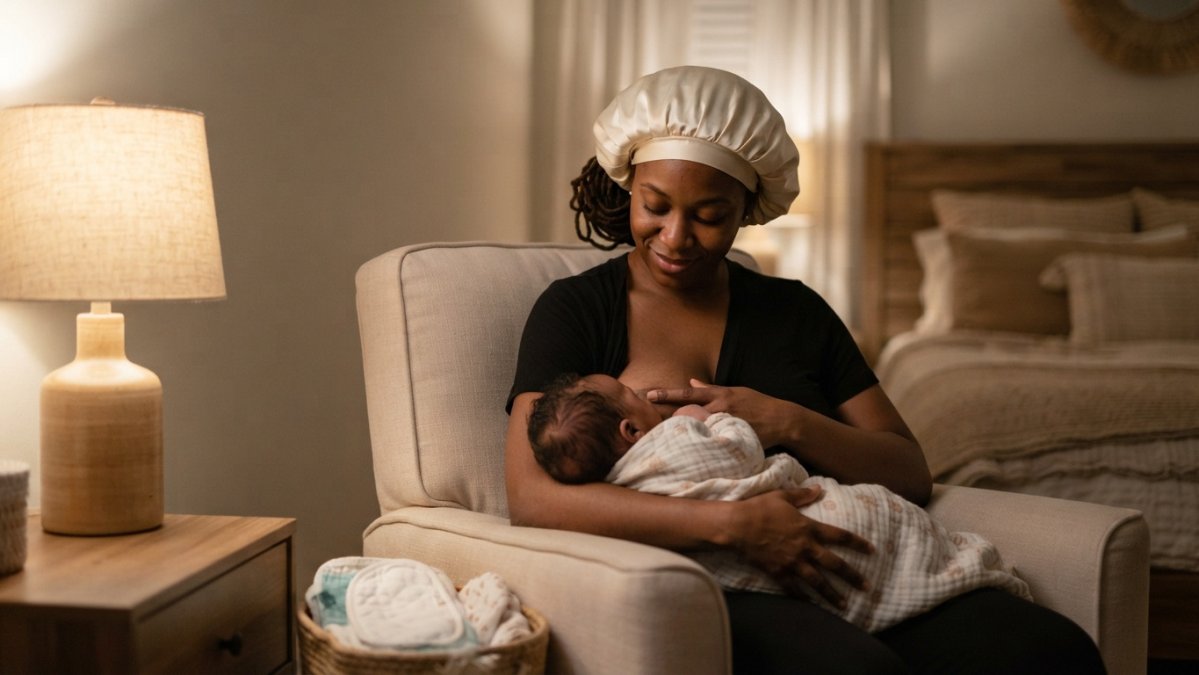
!A new mother in a soft bedroom at night, wearing a cream silk bonnet while holding her newborn during a nursing session, warm lamp light
Less friction against the pillow during feeds
Silk has a low-friction surface, so your head can shift from one side to the other without the hair dragging across the fabric. During a night feed you typically reposition several times, sit up, lean back against the headboard, turn to switch sides, and each of those movements is where cotton pillowcases and cotton headwraps grab and pull. A silk bonnet keeps the hair contained so it slides rather than snags. According to Bolt Pharmacy's 2026 overview of silk bonnets for hair health, silk bonnets are increasingly recognized for reducing friction and moisture loss compared with cotton, which can draw natural oils from the hair.
Fewer tangles and less breakage at the hairline
Hair that stays put overnight is less likely to tangle, which can make morning detangling easier. Keeping the hairline and nape covered can reduce repeated rubbing against the pillow.
Comfort during feeds and skin-to-skin contact
A bonnet is comfortable during nursing as long as it fits well and stays off your face. The practical test is whether you can lean your head back against a chair or headboard, look down at the baby, and feel no band pressing into your forehead or temples. Silk is breathable, which can make it more comfortable to wear than a thick cotton wrap. If you do skin-to-skin contact, the bonnet stays on your head and away from the baby's face, it does not interfere with the chest-to-chest contact itself.
Watch out: a loose bonnet with long ties can drape toward the baby during a feed. Tuck the ties behind your head or choose a style that secures without dangling fabric, and remove the bonnet before you lay the baby down or hand them off.
Realistic expectations for postpartum shedding
A bonnet protects the hair you have; it does not change the shedding that follows birth. Most people see increased shedding in the months after delivery as hair returns to its normal growth cycle, and that shedding is driven by hormones, not by what you sleep in. What a bonnet can do is reduce the breakage and tangling that make shedding look worse and make hair feel thinner at the ends. Think of it as protecting length and edges while the growth cycle resets, not as a treatment for shedding itself.
A note on hair-growth claims
You will see bonnets marketed as growth aids. The honest mechanism is friction reduction: less rubbing means less breakage, and less breakage means you retain more of the length you grow. That is different from stimulating the follicle to produce more hair. No bonnet increases follicle growth, and anyone who has just given birth should expect the growth cycle to take time to normalize. A bonnet is a protective habit, not a growth treatment.
Why Mulberry Silk Is Better Than Satin for Nursing Mothers
Satin and silk are often treated as interchangeable, but they are not the same. Compare mulberry silk and satin for hair to see which works best for you. Satin is a weave, usually made from polyester, while silk is a natural protein fiber. Blissy's 2026 guide to mulberry silk for hair describes mulberry silk as hydrating and shine-enhancing, qualities that synthetic satin does not match.
Mulberry silk is naturally breathable, which can make nighttime wear more comfortable. Explore how mulberry silk supports postpartum recovery. Crowning Legacy by Ms. Carla's bonnets are made from 100% Grade 6A mulberry silk (22 momme).
The Whispered Crown™ — Luxury Mulberry Silk Bonnet →
Postpartum Hair Loss Solutions That Work Alongside Your Bonnet
A bonnet protects hair while you sleep, but it does not stop postpartum shedding on its own. Postpartum shedding is a shift in the hair growth cycle that typically eases over several months. Knowing that timeline helps you judge whether what you are seeing is typical or worth a call to your provider.
Gentle daily habits do most of the work alongside your bonnet:
- Detangle dry hair with a wide-tooth comb, working from the ends up rather than ripping from the roots.
- Skip tight ponytails and tight braids during the first months, especially at the hairline where tension damage adds up.
- Let the scalp breathe between styling sessions instead of keeping hair pulled back all day and all night.
- Wash gently and less often if your scalp feels sensitive, and use a mild shampoo rather than a harsh clarifying formula.
- Keep the bonnet clean so sweat, milk, and skincare products do not sit against your scalp and hairline overnight.
Postpartum scalps can be more sensitive than usual, and some people notice a texture change along with shedding. If your scalp is tender, choose a bonnet with a soft, adjustable band rather than a tight elastic edge, and give your hair a break from any style that pulls. Protective styling and a silk bonnet work well together because both reduce manipulation, the bonnet handles the overnight friction, and gentle styling handles the daytime tension.
Watch out: if shedding is severe, patchy, or continues well beyond the first postpartum year, check with your healthcare provider. Heavy shedding can have causes beyond the normal postpartum cycle, and a bonnet will not address those.
Safety First: Bonnets, Infants and Night Feeds
Infant sleep safety comes first (How to Keep Your Sleeping Baby Safe: AAP Policy Explained). Never place a bonnet, pillow, or any soft item near your baby's face during a feed or while they sleep. Remove the bonnet before handing the baby off, and keep your baby on a firm, flat surface in a crib that meets safe sleep guidance. The bonnet is for your hair, not for your infant's sleep space.
How to Care for Mulberry Silk Bonnets
Silk rewards gentle handling. Hand wash in lukewarm water with a mild, pH-neutral detergent, then rinse and lay flat to dry away from direct sunlight. Read the complete guide to washing silk robes for further care steps. Avoid wringing, which can stretch the fibers. Store the bonnet in a breathable cotton bag between wears. Following these steps helps the bonnet keep its softness and shape for many months of nightly use.
Choosing Your Nursing-Night Bonnet
Pick a bonnet with an adjustable fit so it stays secure without pressure on your hairline. Crowning Legacy by Ms. Carla's The Whispered Crown™ Luxury Mulberry Silk Bonnet uses extended mulberry silk ties rather than elastic, which helps avoid tension while you move. Priced at $95.00, it is designed to be kept and worn nightly. See The Whispered Crown™ mulberry silk bonnet for its full details. If you want a complete set, the Legacy Set™ bundle pairs the bonnet with a matching robe for $333.00.


The article's key product facts for a nursing-night bonnet are summarised below.
| Item | Value | Note |
|---|---|---|
| Material | 100% Grade 6A mulberry silk | 22 momme |
| Ties | Extended mulberry silk | Used instead of elastic |
| Bonnet price | $95.00 | Designed to be worn nightly |
| Legacy Set bundle | $333.00 | Bonnet paired with matching robe |
Frequently Asked Questions
Is it good to sleep in a silk bonnet every night?
For many people, yes. A silk bonnet reduces friction between hair and pillowcase, which helps limit frizz, tangles and breakage over time. Mulberry silk is smooth and breathable, so it tends to feel comfortable through the night. Hair that is already dry or fragile after pregnancy often benefits most from this kind of protection. Keep the bonnet clean and wash it regularly so oils and product do not build up on the fabric.
Can a silk bonnet help with postpartum hair shedding?
A silk bonnet cannot stop postpartum hair shedding, which is driven by hormone changes after birth and usually eases over several months. What a bonnet can do is protect the hair you still have. Less friction means fewer strands snapping or tangling during sleep, so your hair looks fuller and feels easier to manage. If shedding is heavy or lasts well beyond the first postpartum year, talk with your healthcare provider.
Why is mulberry silk better than satin for nursing mothers?
Mulberry silk is a natural protein fiber with a smooth surface that reduces friction against hair. It is also breathable, which can make night feeds more comfortable than a synthetic satin that traps heat. Satin is a weave that can be made from synthetic fibers. Quality varies, so look for listings that clearly state 100% mulberry silk and a momme weight.
How do I choose a silk bonnet for postpartum hair care?
Look for 100% mulberry silk, a double-layer construction and a secure fit that will not slide off during the night. Adjustable silk ties, rather than tight elastic, can help the bonnet stay in place without pressure on the hairline. Check the size against your head and hair volume. The Whispered Crown bonnet from Crowning Legacy by Ms. Carla is made from double-layer Grade 6A mulberry silk and features extended silk ties for an adjustable fit, priced at $95.00.
Night feeds are demanding enough without fighting your hair every morning. Choose a bonnet that fits well, protects your hair without pressure, and feels good to wear. Explore the full collection at Crowning Legacy by Ms. Carla and find the piece that suits your nights.
